René Magritte Museum (house)
The René Magritte Museum is situated in the house where the famous, surrealist artist lived and worked for 24 years (1930-54). Magritte lived on the ground floor and built in the back of the garden Studio Dongo, where he executed designs for publicity work. He painted most of the time in the living room annex atelier. In that room he would produce more or less half the amount of his paintings and gouaches.
The headquarters of the Belgian Surrealists was also in the Esseghemstraat 135, where they held their meetings on Saturday evenings and where they organized several tableaux vivants.
The Museum of Abstract Art is located in the adjacent building. www.abstractartmuseum.be
Visits at weekends: only via online reservation.
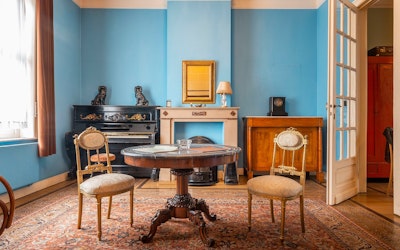 René Magritte Museum (house)
Fantastic Art Museum
Brussels is fantastic! This museum, one of the most atypical of Brussels, presents pieces of different generations which all link to the fantastic, the strange or surrealism. Its collection mixes many techniques and invites on a journey through the imaginary. Conceived as a cabinet of curiosities, the museum is sure to offer visitors a fantastic and unique walkthrough. As would Bosch, Breughel, Delvaux, Magritte, Hergé or Rops, you will not be able to ignore this spooky place in the heart of Brussels!
 Fantastic Art Museum
Solvay House
Architect: Victor Horta - 1895/1898
This luxury townhouse was built by Victor Horta in 1894 for the son of captain of industry Ernest Solvay. The architect was given “carte blanche” and designed the interior and the furniture down to the smallest detail. On the façade, two symmetric bow windows surmounted by balconies are seen to protrude across two floors. Indoors it is a visual extravaganza, with the sheer range of red-orange hues on offer only acting to underpin the atmosphere of luxury and comfort. A must-see building.
Please note : Children under 10 years of age are not admitted to the guided tours.
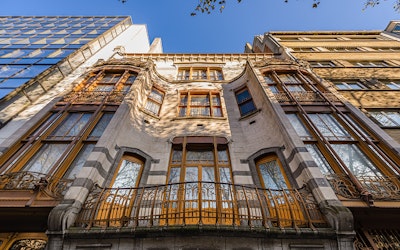 Solvay House
Cauchie House
"Our spaces are currently not available for rental. Please visit this page again for future update."
The Cauchie House is one of the most exceptional Art Nouveau masterpieces in Brussels. Built in 1905, it was originally the home to Paul Cauchie and Caroline Voet, a couple of artists and decorators. The majestic sgraffito on the façade and the opulent decorations of the bel-étage served as a manifesto for their artistic skills. We invite you to join us for a guided tour to discover its history and unique artworks.
Open every Saturday of the month. Individual guided tours, group guided tours.
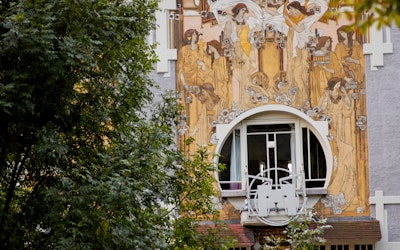 Cauchie House
Sewer Museum
Why not visit the Brussels sewers and the Sewers museum during your next excursion in Brussels. A visit of Brussels' sewerage network - led by experienced guides or ex-workers - is extraordinary, full of surprises, but above all fascinating. The sewers have become vital to our way of life, so much so that it's hard to imagine what it was like before they existed. A visit of the Sewers Museum (and a real sewer!) is therefore an amazing, unusual and thrilling experience.
Brussels' first sewerage network came into use in the 17th century, but they were very limited and a large part of the city's waste still found its way into the river Senne. The river carried waste and carrion and regularly overflowed, or dried out in the summer, leaving behind less-than-pleasant smells.
It was partially due to this, that the government in the second half of the 19th century decided to completely transform the Senne and its neighbouring streets by building great boulevards to cover the insalubrious area. Between the two world wars a second transformation: a portion of the Senne was diverted and then covered over. The sewerage network improved and grew over the years, going from 45 km in 1847 to the 350 km that we have today.
The entrance to the museum is housed in one of the toll pavilions that used to collect taxes on goods that entered the city.
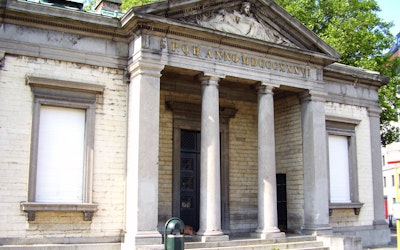 Sewer Museum
Kanal - Centre Pompidou
Kanal-Centre Pompidou, Europe’s largest museum development, will open to the public in Brussels on Saturday 28 November 2026. It will be the city’s first world class museum of modern and contemporary art and architecture.
Housed in the transformed 40,000 sqm former Citroën factory, under one sweeping roof, Kanal features 5 floors of state of the art gallery spaces. It also includes a 7 metre high basement gallery, dedicated spaces for Kanal Architecture (formerly CIVA, the city’s Centre for Architecture, Landscape and Urban Planning), performance and film screening auditoria, workshops and community spaces, cafes and rooftop restaurant/bar with views across the city, an in-house bakery and shops, with generous indoor circulation spaces open free to everyone all day, and leading into a new public square.
 Kanal - Centre Pompidou
Children’s Museum
Pioneer in Europe, The Children’s Museum is located in a beautiful mansion which offers a 600m2 exhibition spaces. In this educational environment, where playing has a key role, you won’t find computers nor video games. Stage settings and scenery, wooden toys, workshops are but some examples of the different means the Museum has put in place to help children in the discovery of the world that surrounds them, as well as themselves. Every exhibition is an exclusive creation that benefits from the guidance of various external specialists in different areas of the educational work fields.
Summer Hours
Private family "Escape Game" at Calypso in the morning (9 to 12 people) Tuesday through Friday
Open to the public every afternoon Monday through Friday (2:30 p.m.–5:00 p.m.)
Special openings to the public every Monday morning (10:00 a.m.–12:30 p.m.)
 Children’s Museum
Train World
Train World is a unique railway experience that takes you from the very first steam locomotives to the flashing high-speed trains! It is a universe that appeals to all the senses in order to grasp the many different dimensions of the railways. A visit to Train World is an active and surprising outing. You can walk among locomotives, take a seat in 100-year-old trains, visit a railway house and walk across a real railway bridge. You will even experience how it feels to drive a train!
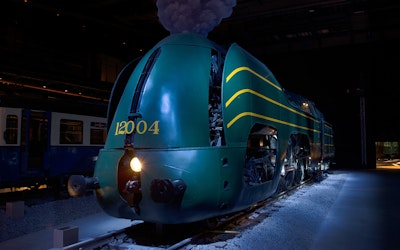 Train World
House of European History
Get ready for a journey like no other!
The permanent exhibition begins with the myth of the goddess Europa, exploring Europe’s ancient roots and the continent’s heritage of shared traditions, before Europe’s dramatic journey towards modernity in the 19th century and rebuilding process following World War II.
A multimedia guide in 24 languages gives you new ways to interact with the exhibition, while special activities and Family Discovery Spaces allow children to grasp the story of Europe.
Located next to the European Parliament in a striking Art Deco building in Parc Léopold, the House of European History is an essential part of any tour of the city.
* Free
* Available in 24 languages
* Book online: See practical information
 House of European History
Royal Museums of Fine Arts of Belgium
The Royal Museums of Fine Arts of Belgium assemble six different museums: the Oldmasters Museum, Meunier Museum, Wiertz Museum and the Magritte Museum.
 Royal Museums of Fine Arts of Belgium
Fondation CAB
CAB is a private centre dedicated to contemporary art. It promotes that genre by holding art projects in a splendid Art Deco exhibition space located not far from Flagey. CAB supports artists by giving them visibility in a place that’s neither an institution nor a gallery. It organises two projects a year, from September to December and from April to June, inviting a curator from a museum or gallery, Belgian or international. With its projects, CAB wants to encourage dialogue and inform the public about the emerging art scene.
 Fondation CAB
Boghossian Foundation - Villa Empain
Opening of Villa Empain to the public according to several themes of organised activities and events (exhibitions, concerts, conferences, etc.) from 2010. La Fondation Boghossian has its international office in Villa Empain, on which restoration work began in 2008. With the Stoclet building, constructed by the Austrian architect Josef Hoffmann in 1911, Villa Empain is undoubtedly one of the finest masterpieces of Art Deco architecture in Brussels. In 1930, Baron Louis Empain, then aged 21 years, had this 2,500-metre-square mansion built on the prestigious Avenue des Nations, which was later renamed Avenue Franklin Roosevelt. He entrusted the building of this fine house to the Swiss architect Michel Polak, assisted by his colleague Alfred Hoch. The plan designed for Baron Empain on a 55-acre plot included a monumental villa with four façades in polished granite, a garden surrounding a swimming pool ornamented with a pergola, and a caretaker's lodge. The modern and luxurious nature of this structure soon aroused enthusiasm and curiosity. It is true that the variety and quality of the materials used (marble, polished granite, bronze, wrought iron, stained-glass windows and precious woods), the sophistication of the details and the coherence of the whole thing with simple but imposing lines immediately contributed to its patrimonial value.
Cultural centres
 Boghossian Foundation - Villa Empain
MigratieMuseumMigration
Today, more than 180 nationalities live together in Brussels. The MigratieMuseumMigration gives a permanent home to the stories of the first generation of guest workers, of the earliest inhabitants of the Petit-Château, of the expats, the war refugees, the Europeans who move freely within the EU and many others. It is a warm environment where visitors can discover Brussels and the lives of others through memories and souvenirs. Above all, it is a museum with plenty of room to share your own story.
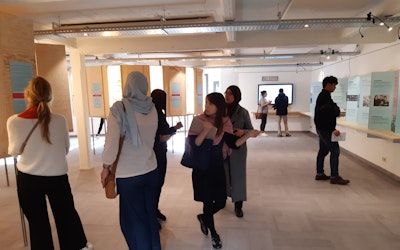 MigratieMuseumMigration
Wittockiana: Museum of book arts and bookbinding
The Wittockiana, which bears the name of its founder and was designed by the architect Emmanuel de Callataÿ, opened its doors in autumn 1983. Avid bibliophile since his adolescence, Michel Wittock built up over his lifetime an impressive collection of books, manuscripts and autographs. Since deciding to share his collection with his bibliophile friends and thus opening the library to the public, the Wittockiana quickly gained a reputation that far exceeded its founder’s hopes and expectations. The circumstances at the time were just right to accelerate the Wittockiana, thanks to the sucess of its publications and expositions with a much larger public than expected as well as thanks to early international recognition, to its status as an indispensable institution in the bibliophilic world. An expansion quickly became necessary to best accomodate this reputation. In 1995 construction of the first floor was entrusted to Wittock’s youngest son Charly Wittock, who had since become an architect.
 Wittockiana: Museum of book arts and bookbinding
Comic Art Museum
A world full of comics
An accomplished attraction located in the heart of Brussels, the Comics Art Museum has been honouring the creators and heroes of the 9th Art for 30 years.
The regularly renewed permanent exhibitions and a diversified programme of temporary exhibitions
enable visitors to discover the countless aspects of comics art.
Famous characters lead the way towards new adventures, an encounter with a world where creativity has no limits.
Enhanced by an exceptional Art Nouveau home designed by Victor Horta, the Comics Art Museum is just as much a tribute
to the pioneers as a glimpse of contemporary comics art.
 Comic Art Museum
Atomium
Halfway between sculpture and architecture, the Atomium was designed and built for the Brussels World's Fair (1958), for which it was the flagship building and emblem. Representing an iron unit cell (9 iron atoms) magnified 165 billion times, the monument with its unique silhouette has, over time, grown to become the symbol of Brussels and Belgium.
On the inside the Atomium offers, not just the most beautiful view of Brussels, but also an entirely astounding and surreal ride through its interior spaces and volumes which alone makes a visit worth it.
The Atomium ticket automatically includes the entrance to the Design Museum Brussels (150m away).
 Atomium
Autrique House
Maison Autrique is the very first striking building Victor Horta designed. It was built in 1893 and it's a major part of Brussels' architectural patrimonium. It underwent an exemplary restoration and is now open to the public. This house is an important Art Nouveau touchstone: we can already see elements that form a part of the continual explorations of the architect. It's interior division is full of surprises: François Schuiten and Benoît Peeters have staged an original scenography, from the cellar to the attic. The house has thus become a sort of tribute to Brussels' private architecture, while at the same time tickling the imagination. The house hosts intimate concerts, temporary exhibitions and workshops for children.
 Autrique House
Museum of the City of Brussels / The King’s House
Two majestic buildings that stand opposite each other on Brussels' Grand Place have a long-standing rivalry: on one side you have Brussels' City Hall, and on the other the Broodhuis (Bread House), a UNESCO World Heritage Site which houses the Brussels City Museum. The rivalry between these two buildings is no coincidence. In the 15th century, the Duke of Brabant replaced the 13th century wooden bread market building with a prestigious building that would be a symbol of his power and face off against the imposing building on the other side of the Grand Place that symbolised the city's independence. The building owes its French name of Maison du Roi (King's House) to Charles V, Holy Roman Emperor, who once ruled over a large part of the globe and once owned the Bread House. After being destroyed in the 16th century, it was rebuilt in the Gothic Revival style in the 19th century by city architect Victor Jamaer.
But it's not all about the Broodhuis' history and facade. Inside the Brussels City Museum gives a comprehensive overview of Brussels' history, with particular attention given to the arts, crafts,urbanism and architecture . The original Manneken Pis is also housed here for security reasons, but as for his wardrobe, which is a thousand times larger than even the most passionate fashionista's, you can marvel at that in its dedicated museum on Rue du Chêne - Eikstraat.
Combined ticket giving access to the Brussels City Museum -Maison du Roi and the Garderobe MannekenPis.
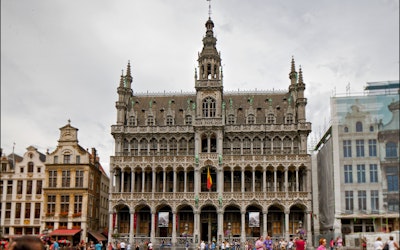 Museum of the City of Brussels / The King’s House
Horta Museum
The Horta Museum is housed in the house and studio of the architect Victor Horta (1861-1947). Both buildings were built from 1898 to 1901 and are typical of the height of Art Nouveau. The interior of the house has been largely preserved: mosaics, stained-glass windows, furniture, wall paintings form a harmonious whole that shows subtlety down to the smallest detail. The museum is also a centre for research on Victor Horta and Art Nouveau. The architect's personal archive, a collection of plans of his buildings and the library are accessible to the public by appointment. Reservation of a time slot online is mandatory. Last access at 16:45.
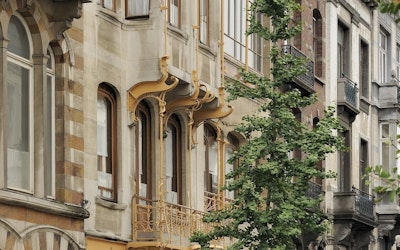 Horta Museum
WOM - World Of Mind
Challenge your brain at the WOM!
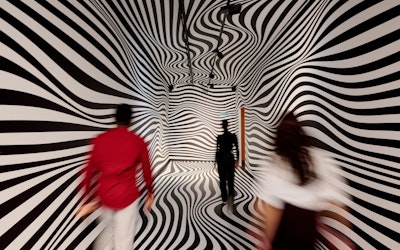
In a museum of 1500m², exercise your senses and challenge your brain in a colourful universe! Dedicated to the five senses, our perceptions and illusions, the WOM is scientific but also recreational.
It's an exceptional experience which questions reality as we perceive it and where science meets fun!
Discover famous illusions such as the mirror room or the vortex but also experiences never seen before in Belgium. Get ready for a visit full of surprises and emotions!
Throughout your visit, meet the well-known neurologist, author and Francqui Prize winner Steven Laureys in the Science Corners. Learn about the five senses, the way our brain works, and discover what happens when we interact with illusions and how we treat the information sent by our environment.
 WOM - World Of Mind
Choco-Story - The Chocolate Museum
Visit to the Choco-Story Brussels museum
Right next to the Grand-Place, Choco-Story Brussels plunges you into the world of cocoa and chocolate, from the origins of cocoa over 5,000 years ago to the famous Belgian praline. You start your journey in the Amazon, passing through an Aztec temple before boarding the Cortes ship that brought cocoa beans to Europe. You'll discover how cocoa is transformed into chocolate and how it is sublimated by our chocolatiers. The tour ends with a traditional praline-making demonstration and tasting sessions. The audioguide, available in 11 languages, is included in the admission price.
Adult admission, without discount: €14/ person
 Choco-Story - The Chocolate Museum
Van Buuren Museum and Gardens
Nestled in the heart of a listed Art Deco architectural and furnishing estate, the van Buuren Museum & Gardens unveils a cultural treasure of rare beauty. Erected in Uccle in 1928 by architects Léon Govaerts and Alexis Van Vaerenbergh, the villa embodies the very essence of Art Deco, preserving its international character influenced by Dutch and French schools.
Inside, an invaluable collection of rare furniture, signed carpets, stained glass windows, sculptures, and masterpieces offers a fascinating dive into art history. This residence, a true architectural gem, has remained intact over the years, thus preserving the integrity of the Art Deco ensemble.
The art collection of the van Buuren Museum & Gardens, reflecting the taste of the owners, offers a captivating overview of art from the 15th to the 20th century. It presents Belgian and international masterpieces, allowing visitors to discover the unique aesthetics of the van Buurens.
The van Buuren Gardens, designed by two of the most prominent Belgian landscape architects, Jules Buyssens and René Pechère, span 1.2 hectares, harmoniously combining picturesque elements and Art Deco. As witnesses of the evolution of the Nouveau Jardin Pittoresque, these gardens offer a unique, immersive experience through six distinct spaces. The recognition of the gardens by the European Route of Historic Gardens attests to their exceptional cultural, historical, and artistic value.
Since its establishment in 1970 by Alice van Buuren, the van Buuren Museum & Gardens Foundation has been committed to preserving and disseminating this cultural treasure. Open to the public since 1975, the museum offers a varied artistic program, enriching the cultural landscape of the region.
 Van Buuren Museum and Gardens
BELvue museum
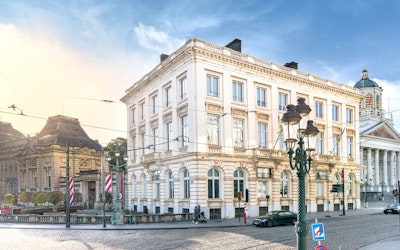
Chips, beer and chocolates... surely there is more to Belgium than that? Democracy, prosperity, solidarity, pluralism, migration, languages and Europe: these are the themes used by the BELvue Museum to help you to discover Belgium. Each one is developed through present-day testimonials and then traced right through history. This is a modern, original way of gaining a fuller understanding of modern-day Belgium.
Have a look at the gallery too: there are more than 200 objects to view, each one forming a tangible memory of Belgium. Here are just a few examples: a lithograph by Magritte, a motorcycle, crystal vases by Val Saint-Lambert, and a football signed by the Red Devils. The very essence of Belgian-ness!
Speciale openingstijden op schoolvakanties en feestdagen 9.30 tot 17.00 uur
24/12 en 31/12 9u30 tot 16u00
Het BELvue Museum is elke woensdag vanaf 14u en de eerste zondag van de maand gratis toegankelijk.
 BELvue museum
Bruxella 1238
Next to the stock exchange building, in the heart of Brussels, is a fascinating little archaeological site. It contains the remains of the Franciscan monastery founded in Brussels in 1238 and the tomb of Duke John I of Brabant. The foundations and various other objects offer a glimpse of an unknown side of the history of Brussels, and at the same time give a good idea of the different aspects of an archaeological dig.
 Bruxella 1238
GardeRobe MannekenPis
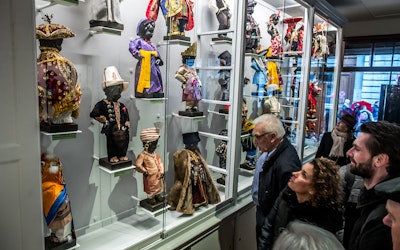
The incredible Manneken-Pis dressing room awaits you at 19 Rue du Chêne, a stone's throw away from the famous fountain.
A representative selection of more than one hundred costumes is presented according to seven themes: geography, folklore, charity and citizens’ associations, trades, celebrities and characters, sports and designers. They show the richness of this fabulous and uncommon collection, which today includes nearly 1,000 items! The sculpture’s clothing – which is a tradition dating back to the 17th century! – is still part of the folklore and historical heritage of the city of Brussels.
Combined ticket giving access to the Brussels City Museum -Maison du Roi and the Garderobe MannekenPis.
 GardeRobe MannekenPis

%20Julien%20Hayard.jpg/_jcr_content/renditions/cq5dam.thumbnail.48.48.png)


%20visit.brussels.jpg/_jcr_content/renditions/cq5dam.thumbnail.48.48.png)
