Béjart fête Bruxelles
Maison Maurice Béjart
Brussels
Exhibitions
Béjart fête Bruxelles
Permanent collection
The Wittockiana is the museum of book arts and bookbinding in Brussels. Its collection, which comprises almost 3,000 works, is made up of unique books: all of them carry their material history, the testimony of an artist, a bookbinder, or the mark of their author.
The Wittockiana is the museum of book arts and bookbinding in Brussels. Its collection, which comprises almost 3,000 works, is made up of unique books: all of them carry their material history, the testimony of an artist, a bookbinder, or the mark of their author.
In addition to various collections of precious books from the Italian Renaissance to the present day, the museum houses a documentation centre, a collection of precious rattles and a workshop where bookbinding courses are given daily.
Wittockiana: Museum of book arts and bookbinding
Woluwe-Saint-Pierre
Exhibitions
 Permanent collection
Be my guide
Discover our brand new audioguides for the Dinosaur Gallery. In "Be My Guide", none other than actress Tine Embrechts and comedian Kody take you through the dinosaur era, together with our museum guides.
Everything you need to know about dinosaurs in 20 minutes, from their early stages as slender bipeds to the fatal meteorite impact! Audioguides are in Dutch and French.
Discover our brand new audioguides for the Dinosaur Gallery. In "Be My Guide", none other than actress Tine Embrechts and comedian Kody take you through the dinosaur era, together with our museum guides.
Everything you need to know about dinosaurs in 20 minutes, from their early stages as slender bipeds to the fatal meteorite impact! Audioguides are in Dutch and French.
Two versions are available: one for children and one for adults. Listen to them on the spot - face to face with the Iguanodons - or at home on your couch, as a podcast! Go to bemyguide.be, or listen on Spotify, Google Podcasts, Apple Podcasts or the Geluidshuis app.
Institute of Natural Sciences
Brussels
Exhibitions
 Be my guide
Gallery of Humankind - Our evolution, our body
From Sahelanthropus to Homo Sapiens, from embryo to adult: explore the human evolution and human body. Follow fossils and 3D reconstructions down the branching paths of 7 million years of evolution, explore the adaptations that set us apart from our predecessors, and witness the complex machine that is the human body.
Institute of Natural Sciences
Brussels
Exhibitions
 Gallery of Humankind - Our evolution, our body
Le Tetrapodium et l'Arthropodium
Institute of Natural Sciences
Brussels
Exhibitions
 Le Tetrapodium et l'Arthropodium
Living Planet
The first time I was taken to the Institute of Natural Sciences when I was seven is a visit I’ll never forget; that herd of dinosaurs in that 19th-century glass and iron building created indelible memories. That reaction is what the museum hopes to provoke with its new permanent exhibit called “Living Planet”. The “modern” building extensions are 70 years old, so the Royal Institute has been renovating the interiors over the past few years, highlighting the natural light which pervades the buildings and extending the digital capabilities of the exhibitions to create an emotional bond between the visitor and the subject matter. “Living Planet” celebrates biodiversity. Going through some of the 37 million specimens in its reserves, the curators chose 850 to populate the new exhibit, which underlines the interdependence between the different species before exploring both the natural and man-made disruptions that threaten worldwide biodiversity.
Institute of Natural Sciences
Brussels
Exhibitions
 Living Planet
Rétrospective Roger Coqart
Atelier pH7
Uccle
Exhibitions
 Rétrospective Roger Coqart
Micro Musée de la Frite: portes ouvertes gratuites + expo 'Culture Fritkot'
Home Frit' Home
Forest
Exhibitions
 Micro Musée de la Frite: portes ouvertes gratuites + expo 'Culture Fritkot'
Collection permanente
The Horta Museum is located in the private house and studio of Victor Horta (1861-1947).
The Horta Museum is located in the private house and studio of Victor Horta (1861-1947). Built between 1898 and 1901 at 23-25, rue Américaine in Saint-Gilles, Brussels, the two buildings are typical of Art Nouveau at its height. The interior decoration has largely been retained, the mosaics, stained glass, and wall decorations forming a harmonious and elegant whole, down to the last detail.
Horta Museum
Saint-Gilles
Exhibitions
Collection permanente
New room on the restoration of Victor Horta's studio house
From 4 February onwards, you can discover the history of the museum's restoration since 1961 in the second drawing studio!
This room, refurbished thanks to the support of the Baillet Latour fund, will be incorporated into the permanent Museum tour.
Thanks to the support of the Baillet Latour Fund, the Horta Museum continues to provide its visitors with access to new areas within the house-cum-studio. Following the opening of the sewing room and darkroom (2018), and the top floor of the house (2019), the first drawing studio was opened in 2020; situated on the second floor of the studio building, it contains Victor Horta’s collection of plaster casts. This year, the second drawing studio, located on the same floor, will also be open to the public !
In this unostentatious room, which was originally occupied by a team of draughtsmen, visitors will be able to learn about the history of the restoration of this house-cum-studio. This room will be incorporated into the Museum tour.
On his return from America after the First World War, Victor Horta left his home and his studios and put both buildings in the Rue Américaine up for sale, moving into a house in the Avenue Louise. The two buildings were divided and the studio became a single family home.
Forty years later, the municipality of Saint-Gilles bought the house (1961). Work on the layout and restorations were carried out by Jean Delhaye, one of Victor Horta’s former students and a champion of his cause. Later, in 1989 and 2014, the second restoration project took place. This was directed by the architect Barbara Van der Wee, together with Françoise Aubry, the Museum’s Curator, whose story of the restoration process was awarded the Europa Nostra prize in 2014.
Through an animated film, the most iconic restoration operations are described in a highly effective and poetic manner, given the complexity of the numerous successive stages involved. It is possible to study this from a more technical angle by analysing and comparing the plans drawn up by Horta, from the first building permit filed in 1898 to the transformations carried out in 1906 and 1908. The longitudinal cross-sections and elevations of the four façades enable us to visualise the spaces that were transformed and restored during the two restoration projects, and they explain the development of elements that were added, dismantled and reconstructed.
In addition to using the film, plans and texts, the aim was also to give this history a tangible quality. Thematic colour charts have therefore been created, displaying the rich palettes of tones and textures to be found in the Museum. These make it easier for visitors to visualise the range of hues used by Horta and to appreciate the refined character of the house.
Each restoration project also brought together professional artisans and restorers, both men and women, who worked behind the scenes. The house-cum-studio has benefitted greatly from their skills and talents. Their portraits are displayed on the end wall as an additional reminder of the importance of expert craftsmanship.
Benjamin Zurstrassen (Curator), Françoise Aubry (Exhibition Curator)
Horta Museum
Saint-Gilles
Exhibitions
 New room on the restoration of Victor Horta's studio house
Lace Room
Through previously unseen pieces, recently acquired or specially retrieved from storage, you will plunge into the extraordinary history of Brussels lace. A fabric that has since disappeared.
Lace is an openwork fabric made with a needle or bobbins. The motifs are connected to each other by a background of stripes or mesh. Initially, it was made by hand and later it was mechanised. Lace is distinguished by its techniques, materials, motifs, colours, etc. Most of the time, it is the place where they were first produced that identifies them: Brussels, Mechelen, Valenciennes, Bruges, and so on.
Brussels lace has gained international renown over the centuries. Its finesse, quality and beauty made it the preferred textile of the elites from the 17th century. It found its way to the greatest royal courts of Europe, adorning the apparel of both men and women.
The lace owned by the museum is an integral part of Brussels’ heritage. Several of the items on exhibit are included in the inventory of moveable heritage of the Brussels-Capital Region. Discover an example of lace whose scalloped edges are made up of alternating leaves and flowers.
To be seen in the Lace Room
A piece of recently acquired needle lace
This scarf in point de gaze and cotton was made with a needle. It dates from the second half of the 19th century, but entered the museum’s collections only in 2021, thanks to the gift of the Hynderick de Theulegoet family.
It uses a wide variety of points, allowing every shade of white to create both the motif and the background. All the parts are made separately and then assembled on a background made with a needle.
The lace of Carine Gilson
This Babydoll slip from the Garden of Lace collection, Spring-Summer 2019, is made of a fuchsia mechanical lace stitched onto silk muslin. The stitching of mechanical lace onto silk is the trademark of the House of Carine Gilson. It thus perpetuates expertise in Brussels lace.
The creator has honoured us by agreeing to become the patron of the Lace Room. The museum regularly exhibits an item from her collections.
Fashion & Lace Museum
Brussels
Exhibitions
 Lace Room
"Another history of Brussels" The popular districts of the canal
Discover the canal in 14 codes.
Fun and interactive exhibitions, entertainment for children and adults, a palace of images and a ± 1,000m2 garden to be explored with the family, with a school or in a group!
Download our smartphone izi TRAVEL app
Discover the canal in 14 codes.
Fun and interactive exhibitions, entertainment for children and adults, a palace of images and a ± 1,000m2 garden to be explored with the family, with a school or in a group!
Download our smartphone izi TRAVEL app
COOP
Anderlecht
Exhibitions
 "Another history of Brussels" The popular districts of the canal
Halle Gate
Although thousands of people pass every day close to this remaining part of the second surrounding wall of Brussels, along the "petite ceinture" between the Place Louise and the Midi Station, very few of them are conscious of its eventful history. This fairytale monument, more than 600 years old is in fact the most remarkable witness of the City's medieval past.
Open on Mondays! The Halle Gate houses now a permanent presentation dedicated to the medieval City of Brussels. Climb the Halle Gate’s 169 steps and enjoy Brussels’ most stunning panoramic view. It’s a breathtaking plunge back into the 16th century!
For families : After the museum, children can have a great time in the most beautiful outdoor playground of Brussels, located only 100 meters from the museum. Adventure assured in this castle and medieval village with accompanying sandbox.
Halle Gate – RMAH
Brussels
Exhibitions
 Halle Gate
MoMuse - Musée Communal de Molenbeek
Municipal Museum of Molenbeek Saint-Jean
Molenbeek-Saint-Jean
Exhibitions
MoMuse - Musée Communal de Molenbeek
Art & History Museum - galleries
Step inside this historic building, one of the biggest museums in Belgium and erected by former Belgian King Leopold II. Discover a wealth of artefacts from prehistoric times over antiquity and the European applied arts to a vast collection of non-European art.
Art & History Museum (RMAH)
Brussels
Exhibitions
 Art & History Museum - galleries
The birthday train
Looking for an unforgettable venue for your birthday party? Come and blow out your birthday candles at the world’s best railway museum!
Looking for an unforgettable venue for your birthday party? Come and blow out your birthday candles at the world’s best railway museum!
Climb into the finest engines, admire the Royal Family’s coaches, explore the museum with a guide, or blow out your candles in a real carriage!
Several packages are available:
1. An exciting tour of Train World
2. The restaurant car for you and your friends only
3. An unforgettable afternoon in the restaurant car and museum
Booking
At least two weeks before the day of the visit via reservations@trainworld.be.
More info: https://www.trainworld.be/en/practical-information/for-children/the-birthday-train
Train World
Schaerbeek
Exhibitions
 The birthday train
Discover today the railway world of yesterday and tomorrow
We are not just another railway museum; we are more of a train opera. Visit us and spend an unforgettable day in the Train World universe. You will discover the most beautiful and unique pieces from the history of the Belgian railways. We combine the fascinating story of the train throughout the centuries with a look into the future.
Train World is home to the most beautiful objects from the history of the railways, all
brought together in a building steeped in history. Historic rolling stock, railway artefacts, unique archive material, photographs and films will take you on an interactive journey through time.
Train World welcomes you into the fabulous Schaerbeek station, one of the oldest and most original buildings in Belgium. The station is directly connected to the brand new museum complex with its sawtooth architecture and creates a perfect symbiosis
between the old and the new, fitting perfectly within the Art Nouveau heart of Schaerbeek.
Attention: the entry doors and the ticket office of Train World closes at 15:30!
Train World
Schaerbeek
Exhibitions
 Discover today the railway world of yesterday and tomorrow
Centrale
Atomium
Laeken
Exhibitions
 Centrale
belgisch design belge
A pop-up laboratory where the successive presentations that are sometimes subjective and never exhaustive will be representative of Belgian design. Pieces from different eras, materials, statuses and natures build side by side a history of design in Belgium. For this first selection, objects from the plastic design collection – the particularity of our institution – interact with pieces of modern and contemporary design from the King Baudouin Foundation.
Design Museum Brussels
Laeken
Exhibitions
 belgisch design belge
the Plastic Design Collection
the Plastic Design Collection pays tribute to the diverse and heterogeneous plastic design that has transformed our domectic environment since the 1950s. From material to object and from object to society, the permanent exhibition from this collection develops a cultural history of design.
Design Museum Brussels
Laeken
Exhibitions
 the Plastic Design Collection
EDEN 2.023 · A New Perspective on Paradise
Within the framework of Art Nouveau Brussels 2023, twenty-five 80x120 photos by the photographer Violaine Alghisi mixing dance and architecture have been selected with the eyes and the heart for an immobile journey in the intimacy of the more confidential Masterpieces of Belgian Art Nouveau.
The work produced by photographer Violaine Alghisi for this new exhibition expresses in a singular way both the architectural dimension of bodies and the organic corporality of Art Nouveau architecture. A proposal of in-between for a new perspective on a Paradise free of any religious dimension, except to consider its natural immanence.
With EDEN 2.023, Violaine Alghisi exhumes with a gentle lightning the whole message of liberation and questioning of the classical norms and codes carried by the Art Nouveau in its time.
Silhouettes, sometimes sensual, sometimes enigmatic, but always free, stand out like ghosts brought back to life on the walls and stained-glass windows of these monuments, reflections of a bygone era but nevertheless very present.
In her photos, the calm of the place becomes a pretext for transgressing the common rules of museums: here, we dance on the furniture of the Villa Autrique, we choreograph the furniture of Hamesse and so much the worse for the frozen whiteness of the tablecloths, it is the majesty of the bodies in movement that asserts itself standing on the dining room table!
A tender but impetuous artist, she gives us a look that mixes past and present, still and animated, which has chosen the more confidential Masterpieces of Belgian Art Nouveau as its setting.
Her approach questions the biases of style to offer a delicately punk vision of a newly postulated life of a Belle Époque revisited...
Created in the context of Art Nouveau Brussels 2023, the exhibition is accessible free of charge during the opening hours and days of the Ultieme Hallucinatie.
Twenty-five 80x120 photos, colour or black and white, selected with the eye and the heart for an immobile journey into the mysteries of the Hôtel Cohn-Donnay, the Maison Autrique, the Hôtel Hannon, the Horta Museum and the Horta Chapel, or the Maison des Médecins de Charleroi...
So many new stories told in light that intertwine to join those of the Hôtel Cohn-Donnay.
And you, what will your story be there?
The Artist
Violaine Alghisi is a visual artist and photographer from Brussels with Italian origins. She is a reflection of her mixed cultures...
Between Northern Surrealism and Latin Poetry, soft and baroque, her photographic adventures give a glimpse of powerful impressions of sensuality, strength and assumed tenderness.
At the antipodes of the search for performance, her intimate work favours instinct and feeling, with the encounters that punctuate his life as material...
De Ultieme Hallucinatie: Back to the roots
The Hotel Cohn-Donnay - better known today by the name of the Brasserie it houses - is a symbol of Art Nouveau and is reviving its long tradition of art and culture. After having been the setting for the music and intimate life of the virtuosa Marie Pleyel, and then a mecca for the nightlife of the 1980s, it is now destined to highlight and preserve the stories and heritage it houses.
Reopened to the public in 2019 by a lover of beautiful stones and the art of living, the building is resolutely accessible to all and now offers, in addition to its Belgian brasserie, event spaces and meeting rooms. It has also become a refuge for Brussels storytellers every third Friday of the month, the venue for the Hallucinated Visits by the Brussels zieverologist Phillipe Baudot, as well as for jazz projects orchestrated by Bénédicte Williot.
The long work of preserving and restoring the architectural heritage and the somewhat crazy project of creating the Marie Pleyel Museum are also well underway. However, it is possible that the opening of our Jazz Cabaret and our first classical concerts will precede them. A little time, a lot of work and a lot of fun ahead...
For Art Nouveau Brussels 2023, we are pleased to produce and host an exhibition combining the architecture of bodies with Art Nouveau and to host the closing night of the BANAD festival.
What do all these proposals have in common? Perhaps a desire for excellence and a little extra soul.
And if you too came to join the Ultieme to the Pleasant...
Within the framework of Art Nouveau Brussels 2023, twenty-five 80x120 photos by the photographer Violaine Alghisi mixing dance and architecture have been selected with the eyes and the heart for an immobile journey in the intimacy of the more confidential Masterpieces of Belgian Art Nouveau.
De Ultieme Hallucinatie
Saint-Josse-Ten-Noode
Exhibitions
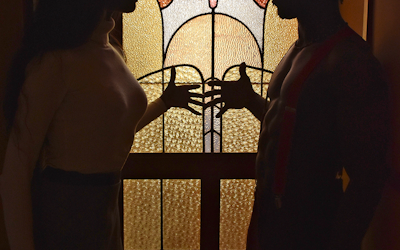 EDEN 2.023 · A New Perspective on Paradise
Black Sisters from Brussels
the ticket to the panorama gives you free access to the 2 museums of the National Basilica (during opening hours)
asbl Amis de la Basilique Nationale
National Basilica of the Sacred Heart - Koekelberg
Ganshoren
Exhibitions
 Black Sisters from Brussels
The Atomium. From Symbol to Icon
The exhibition 'The Atomium: from symbol to icon' is spread over 2 floors and the panorama. It tells the history of this pavillion of more than 50 years old. It has become the symbol of the city of Brussels and of Belgium.
The exhibition not only tells the story of the construction of the building and of Expo 58 but also of its decline at the end of the '90's before its renovation. And of its 'second ' life since 2006.
On 17th April 1958, the last universal world fair organised by Belgium was inaugurated on the Heysel site in Brussels.
A hugely colourful event, spreading a message full of boundless optimism, reflecting a society characterised by confidence in its future, Expo 58 inspires fond memories in our collective consciousness.
Using archived documents, photographs, souvenirs and videos from the era as well as countless models, this exhibition will take visitors on a journey back in time to this unforgettable, breathtaking event.
In the panorama the visitor gets extensive information about the location of Brussels' buildings and districts. Certain European and world cities are situated as well so the visitor can orientate himself. Finally he can compare images of Expo 58 with what he can see from the panorama today.
For some, this is the perfect opportunity to rediscover this enchanting experience; for others, who know nothing about Expo 58 and its passion for progress, this is a chance to learn about this magical time which still infuses the Atomium with its energy.
Symbol and « brand » of Expo 58, the star of Lucien De Rouck is unavoidable.
Lucien De Roeck (Belgium 1915-2002) dedicated his life to design,typographie and teaching. In 1954 he won the design competition designing the logo and poster for the Worldfair in Brussels that would take place in 1958.
The Expo-star, an elegant, asymmetric star, still is a recognizable symbol. The five rays represent the five continents, carrying out the humanistic message to the entire world. On the right side you can see a globe and the date. In the center of the star one can recognize an image of the Brussels city hall.
In 1958 this star was everywhere, on posters, streetcars, outfits of the hostesses, souvenirs...
Atomium
Laeken
Exhibitions
 The Atomium. From Symbol to Icon
Museum of the National Bank of Belgium
The National Bank of Belgium houses its museum in a magnificent nineteenth-century bank building. This is the perfect backdrop to get acquainted with the activities of a European central bank and the history of money.
The National Bank of Belgium houses its museum in a magnificent nineteenth-century bank building. This is the perfect backdrop to get acquainted with the activities of a European central bank and the history of money.
Museum of the National Bank of Belgium
Brussels
Exhibitions
 Museum of the National Bank of Belgium
WOM - World of Mind
Discover the WOM at Tour & Taxis (Brussels), dedicated to
perceptions and illusions at the crossroads of science and fun.
With colleagues, family or friends, challenge your brain and have fun
with more than 120 extraordinary illusions.
The WOM welcomes you for an interactive experience that will
disturb your senses!
Visit duration: 1h-1h30
The WOM (World of Mind) is a confusing brain experience to enjoy in Tour & Taxis.
Exercise your senses and challenge your brain in a colourful universe! Dedicated to the five senses, our perceptions and illusions are scientific but also recreational.
Enjoy this exceptional experience (1h30) which questions reality as we perceive it and where science meets fun! Discover famous illusions such as the mirror room or the vortex but also experiences never seen before in Belgium. Get ready for a visit full of surprises and emotions!
The WOM? A destination where you can cultivate yourself, eat and attend amazing events in Brussels. See you at Tour & Taxis in Shed 4bis, next to the Food Market!
World of Mind
Brussels
Exhibitions
 WOM - World of Mind


%20%C2%A9%20Ch.%20Herscovici,%20avec%20son%20aimable%20autorisation%20co%20SABAM%20Belgium,%20Mus%C3%A9es%20royaux%20des%20Beaux-Arts%20de%20Belgique,%20Bruxelles,%20J.%20Ge.jpg/jcr:content/renditions/cq5dam.zoom.2048.2048.jpeg)
