AMVB - Archives and Museum of Flemish Life in Brussels
The museum throws light on Flemish culture in Brussels with the help of documents, photographs, archives, posters, flags, and sculpture from the 19th century to the present day. All the great figures of Flemish Brussels history are here: Julius Hoste, Charles Buls, members of the “Van-nu-en-straks” movement, and others. The archives contain priceless material, directly related to events in the cultural emancipation of Flanders in the capital, such as the establishment of the Flemish Theatre.
 AMVB - Archives and Museum of Flemish Life in Brussels
argos centre for audiovisual arts
argos is a centre for audiovisual arts, based in Brussels. The organization celebrates artist films and videos through exhibitions, collections, public programming, distribution and a library. Home to Belgium’s largest collection of artist’s moving image works, argos explores the past, illuminates the present and shapes, with the help of many others, the future of audiovisual arts.
 argos centre for audiovisual arts
Art & marges museum
Located in the heart of Brussels, the Art et marges museum is dedicated to ‘art brut’ or ‘outsider art’.
Its collection was built up from the mid-1980s with artworks from self-taught artists and artistic workshops for the mentally disabled and the psychologically fragile. It now comprises over 4,500 international works produced outside the established contemporary art circuit.
Its temporary exhibitions bring together artists from both sides of the fringe, questioning the boundaries of art and its very definition.
 Art & marges museum
Autoworld
An impressive historic building in Brussels, linked with automotive history, is home to Autoworld, the Belgian National Automobile Museum. Situated in the ‘Parc du Cinquantenaire’, the neo-classical building commemorated the 50th anniversary of the Kingdom of Belgium in 1880. From 1902 to 1936 it hosted motor¬car and motorbike exhibitions. Since 1986 it has treasured the major part of Ghislain Mahy’s renowned classic car collection.
Over 300 vehicles, ranging from cars and trucks to motorcycles, are on permanent display. From the earliest models of the dis¬tant past to contemporary cars that prefigure the automobile of tomorrow, visitors are guided through the motorcar’s history dating as far back as 1896.
Various cars representing the most exciting years of the auto¬mobile history since 1960 can be approached and admired from close by, thanks to a brilliantly designed scenography.
Special sections focus on sports and competition, cars owned by the Belgian Royal Family, micro and bubble cars, and car design. The Belgium at Autoworld section is dedicated to the roots and history of the Belgian car industry.
Autoworld is a museum on the move, with temporary exhibi¬tions taking on various automotive themes organised through¬out the year.
More detailed information on autoworld.be
 Autoworld
Belgian Museum of Freemasonry
Historic and thematic overview of the history of freemasonry in Belgium.
The Belgian Museum of Freemasonry is a gesture of openness, an invitation by an institution renowned for it’s discretion and veiled in mystery, to get acquainted with its history. The museum, situated in an exquisitely restored neoclassical townhouse (house Dewez, late 18th century), presents artworks, ritual objects, jewellery, textiles, documents and books from the 18th century and on. They illustrate the origins, historic evolution, workings, ideas and present structures of freemasonry.
Exceptional opening:
First Sunday of the month: 13.00 - 17.00 free admission
 Belgian Museum of Freemasonry
Brussels Museum of the Mill and Food
Based in a former windmill, the Brussels Museum of the Mill and Food is located in an extensive island of greenery. Since its opening in 2008, the museum has explored numerous topics related to food in temporary exhibitions.
 Brussels Museum of the Mill and Food
Comic Art Museum
A world full of comics
An accomplished attraction located in the heart of Brussels, the Comics Art Museum has been honouring the creators and heroes of the 9th Art for 30 years.
The regularly renewed permanent exhibitions and a diversified programme of temporary exhibitions
enable visitors to discover the countless aspects of comics art.
Famous characters lead the way towards new adventures, an encounter with a world where creativity has no limits.
Enhanced by an exceptional Art Nouveau home designed by Victor Horta, the Comics Art Museum is just as much a tribute
to the pioneers as a glimpse of contemporary comics art.
 Comic Art Museum
BELvue museum
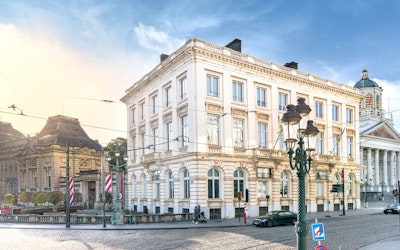
Chips, beer and chocolates... surely there is more to Belgium than that? Democracy, prosperity, solidarity, pluralism, migration, languages and Europe: these are the themes used by the BELvue Museum to help you to discover Belgium. Each one is developed through present-day testimonials and then traced right through history. This is a modern, original way of gaining a fuller understanding of modern-day Belgium.
Have a look at the gallery too: there are more than 200 objects to view, each one forming a tangible memory of Belgium. Here are just a few examples: a lithograph by Magritte, a motorcycle, crystal vases by Val Saint-Lambert, and a football signed by the Red Devils. The very essence of Belgian-ness!
Speciale openingstijden op schoolvakanties en feestdagen 9.30 tot 17.00 uur
24/12 en 31/12 9u30 tot 16u00
Het BELvue Museum is elke woensdag vanaf 14u en de eerste zondag van de maand gratis toegankelijk.
 BELvue museum
Botanique
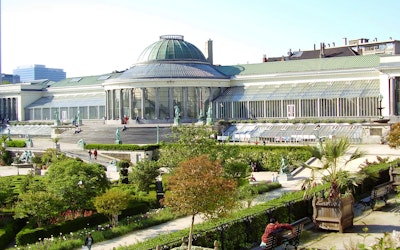
The former botanical gardens provide the unique location for the stylish cultural centre of the French community and are a great place to relax. Concerts are held in the intimate surroundings of its eight spaces and multipurpose halls, of which the most famous are the Orangerie, the Rotonde, the Museum, and the Witloof Bar.
 Botanique
Bozar - Centre for Fine Arts
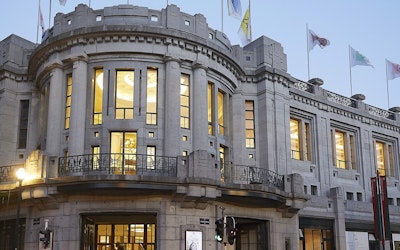
It’s impossible to talk about culture in Belgium without mentioning the Centre for Fine Arts located in Brussels. Whether it comes to exhibitions, concerts, theater performances, movies or projects concerning literature and architecture, BOZAR will always put originality and innovation first. They prove to keep a finger on the pulse with their varied and sophisticated programme. Besides emphasizing the importance of creation, quality and a rich artistic offering, BOZAR is especially concerned about the total experience of the visitors.
 Bozar - Centre for Fine Arts
Brel Foundation
Are you a fan of Jacques Brel who has always wanted to see Brussels from his point of view?
Driven by a spirit of transmission to the new generations, the Brel Foundation gathers, indexes and digitizes archives related to the work and life of Belgian artist Jacques Brel. Located a stone’s throw from the Grand Place, it offers a permanent digital exhibition where visitors can discover the multiple facets of the man’s talent in the Brel Chanteur and Brel Auteur spaces.
Visitors can also discover his career of singer and actor in our movie theater Ciné Brel. 5 screenings a day, Including the mythical concert "Les Adieux à l'Olympia" from 1966.
Movie programmation : http://fondationbrel.be/cine-brel-programmation/
Also, a walking tour with audio guide in the native city of the singer is available for anyone who wants to discover Brussels through one of his most iconic figures.
A little extra bonus: the Brel Foundation regularly organises film clubs in the presence of France Brel, one of the famous singer's daughters (only in French).
Tourist or great connoisseur, everyone Is welcome!
* The Brussels Card only gives access to the permanent exhibition of the Museum. The movie theater and the audio guided walking tour are additional activities.
 Brel Foundation
Charlier Museum
The museum is based in the private mansion, dating from the 19th century, of the sculptor Guillaume Charlier. It focuses on Belgian painting from the late 19th to the early 20th century. Its art exhibitions take place in a setting of lavish furnishings, with numerous decorative pieces from the Louis XV, Louis XVI, and Empire periods.
 Charlier Museum
Kanal Architecture (ex-CIVA)
Kanal Architecture (ex-CIVA) is a museum, an archive center, a library and a meeting place for lovers of architecture, landscape architecture, urban ecosystems and history in Brussels. Throughout the year, Kanal Architecture organizes temporary exhibitions, lectures, debates, guided tours, book launches and activities for children.
In preparation for its relocation, it closed its doors permanently at its Rue de l'Ermitage location on December 2025. See you on 28 November 2026 for the opening of Kanal, in a brand new location offering larger spaces and a more central location.
 Kanal Architecture (ex-CIVA)
Coudenberg Palace
Once upon a time, the Coudenberg Palace towered over the city of Brussels. Charles V and many other of the most powerful rulers ever to reign in Europe made this princely residence their home between the 12th and 18th centuries, until it was consumed by a terrible fire. Every trace of this prestigious palace simply disappeared underground for many years. Today, however, these ruins constitute a fascinating archaeological site incorporating a network of underground passages and chambers.
During a visit, explore the principal buildings of the palace and enjoy a stroll along the Rue Isabelle, which is now underground.
Immerse yourself in the prestigious history of Brussels and its palace!
 Coudenberg Palace
Design Museum Brussels
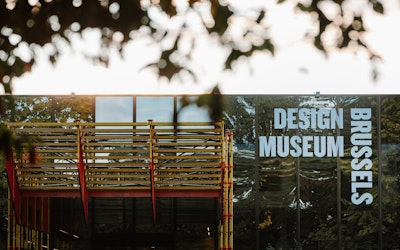
The Design Museum Brussels, established after the acquisition of a private collection by the Atomium, is a place dedicated to design and its history. Since 2015, the museum's collection, the Plastic Design Collection, circumscribes the landscape of plastics in design from the 1950s to the present day. Alongside this collection, the museum opened Belgisch Design Belge, a new permanent exhibition space dedicated to Belgian design and its history.
Enriched by a programme of temporary exhibitions, the Design Museum Brussels also explores other fields of design creation and its impact on society and our daily lives.
Through exhibitions, guided tours, workshops, conferences and events, the museum aims to ensure that design is intelligible to one and all.
 Design Museum Brussels
Erasmus House & Beguinage Museums
The Erasmus House, beguinage, and collegiate church of Saints Peter and Guido form a magnificent historical ensemble, right in the heart of the commune. Erasmus House – in which the famous philosopher and scholar stayed from May to October 1521 – is one of the oldest Gothic houses in the Belgian capital. It hosts a sublime collection of paintings, prints and sculptures by 15th-17th century masters like Albrecht Dürer, Hugo Van der Goes, Cornelis Metsys… not to mention portraits of Erasmus inspired by Hans Holbein and Quentin Metsys. A rich collection of 16th century books is a nod to the singular humanist’s thinking.
A medicinal plant garden – designed by landscape architect René Pechère – presents around one hundred medicinal plants that were known to 16th century physicians. Beyond it stretches a philosophical garden that is home to the works of contemporary artists like Marie-Jo Lafontaine and Bob Verschueren.
The beguinage of Anderlecht is Belgium’s smallest. Founded in 1252, today it consists of two wings framing an enclosed garden with its own well. It housed beguines right up until the French Revolution. The beguinage has been restored in depth and is once again open to visitors each 1st Sunday of the month with guided tours. Discover this entirely restored architectural jewel in a pristine state.
A new museum project is currently in the pipeline.
 Erasmus House & Beguinage Museums
Fondation A Stichting
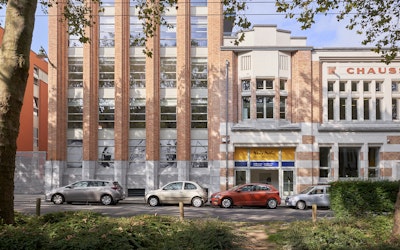
The Foundation is settled in a formerly industrial area of the town which has gradually been transformed into a residential neighborhood with many sites devoted to artistic creation. As a cultural actor, the Foundation’s desire is to participate in the life of this neighborhood. A genuine platform devoted to the photographic image, the A Foundation also works toward forming partnerships for exhibition and book projects organized in collaboration with Belgian and international cultural institutions.
In October 2012, the A Foundation opened its doors in the south of Brussels on the site of the former Bata factories. Created upon the initiative of d’Astrid Ullens de Schooten Whettnall, and recognized as promoting the public interest, it has a vocation to support the creation, knowledge, and preservation of the photographic image.
 Fondation A Stichting
Fondation CAB
CAB is a private centre dedicated to contemporary art. It promotes that genre by holding art projects in a splendid Art Deco exhibition space located not far from Flagey. CAB supports artists by giving them visibility in a place that’s neither an institution nor a gallery. It organises two projects a year, from September to December and from April to June, inviting a curator from a museum or gallery, Belgian or international. With its projects, CAB wants to encourage dialogue and inform the public about the emerging art scene.
 Fondation CAB
GardeRobe MannekenPis
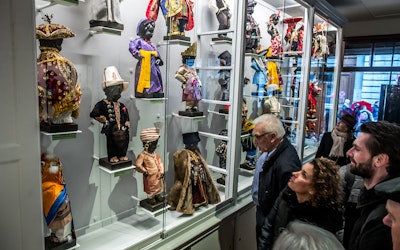
The incredible Manneken-Pis dressing room awaits you at 19 Rue du Chêne, a stone's throw away from the famous fountain.
A representative selection of more than one hundred costumes is presented according to seven themes: geography, folklore, charity and citizens’ associations, trades, celebrities and characters, sports and designers. They show the richness of this fabulous and uncommon collection, which today includes nearly 1,000 items! The sculpture’s clothing – which is a tradition dating back to the 17th century! – is still part of the folklore and historical heritage of the city of Brussels.
Combined ticket giving access to the Brussels City Museum -Maison du Roi and the Garderobe MannekenPis.
 GardeRobe MannekenPis
Halle Gate – RMAH
This last preserved gate will catapult you centuries back. An interactive tour through the striking rooms of the 14th century city gate will reveal how Brussels defended itself against external attacks during the Middle Ages and present the role that townspeople played in defence of their city. Visitors will gain a better understanding of the medieval city and its impact on present-day metropolitan Brussels by trying on a piece of armour, checking out models and short films, exploring multimedia activities or just simply admiring the beautiful selection of museum pieces.
And, the changing temporary exhibits on past and current life in the city are always a great reason to return to the Halle Gate.
 Halle Gate – RMAH
Autrique House
Maison Autrique is the very first striking building Victor Horta designed. It was built in 1893 and it's a major part of Brussels' architectural patrimonium. It underwent an exemplary restoration and is now open to the public. This house is an important Art Nouveau touchstone: we can already see elements that form a part of the continual explorations of the architect. It's interior division is full of surprises: François Schuiten and Benoît Peeters have staged an original scenography, from the cellar to the attic. The house has thus become a sort of tribute to Brussels' private architecture, while at the same time tickling the imagination. The house hosts intimate concerts, temporary exhibitions and workshops for children.
 Autrique House
Horta Museum
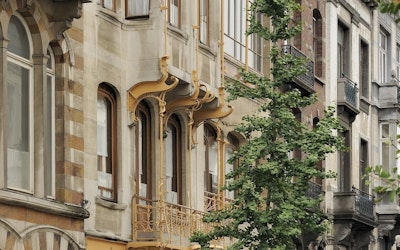
The Horta Museum is housed in the house and studio of the architect Victor Horta (1861-1947). Both buildings were built from 1898 to 1901 and are typical of the height of Art Nouveau. The interior of the house has been largely preserved: mosaics, stained-glass windows, furniture, wall paintings form a harmonious whole that shows subtlety down to the smallest detail. The museum is also a centre for research on Victor Horta and Art Nouveau. The architect's personal archive, a collection of plans of his buildings and the library are accessible to the public by appointment. Reservation of a time slot online is mandatory. Last access at 16:45.
 Horta Museum
iMAL, Center for Digital Cultures and Technology
iMAL is a cultural organisation, located in Molenbeek, Brussels, combining the roles of an Art Center and a Lab. It is a meeting place between different communities with a special attention to the local scene. iMAL's 25th anniversary marks the beginning of a broader reflection on resilience, resistance to the dominant definition of progress, and the responsibility of fostering solidarity.
iMAL supports artistic practices that critically engage with digital technologies. We propose a multi-voiced and transdisciplinary approach to contemporary issues through our program consisting of exhibitions, research and production residencies, reflection and training, and public engagement.
iMAL also has its own workshop, the iMAL Fablab, where residencies take place every year. The Fablab also has its own public access system, with the aim of making technology accessible to all without distinction.
In the coming years, iMAL will explore the degrowth of computation and aims to emphasize the importance of regenerative production ecosystems.
iMAL is only open during its public events. Please check our programme for further information.
 iMAL, Center for Digital Cultures and Technology
Jewish Museum of Belgium
Located in the Sablon district of Brussels, the Jewish Museum of Belgium takes a fresh look at Jewish history and culture through exhibitions and activities focusing on sharing, discovery and accessibility for all sectors of the public.
The museum is currently closed for renovation work.
 Jewish Museum of Belgium
Kanal - Centre Pompidou
Kanal-Centre Pompidou, Europe’s largest museum development, will open to the public in Brussels on Saturday 28 November 2026. It will be the city’s first world class museum of modern and contemporary art and architecture.
Housed in the transformed 40,000 sqm former Citroën factory, under one sweeping roof, Kanal features 5 floors of state of the art gallery spaces. It also includes a 7 metre high basement gallery, dedicated spaces for Kanal Architecture (formerly CIVA, the city’s Centre for Architecture, Landscape and Urban Planning), performance and film screening auditoria, workshops and community spaces, cafes and rooftop restaurant/bar with views across the city, an in-house bakery and shops, with generous indoor circulation spaces open free to everyone all day, and leading into a new public square.
 Kanal - Centre Pompidou
KBR
At KBR, history comes to life. The Royal Library of Belgium collects all Belgian publications and preserves a vast cultural and historical heritage. The collection contains over 8 million items, including books and manuscripts, newspapers, prints, music scores, coins, medals, and maps. As the national scientific library, KBR’s mission is to manage, study, and make this heritage accessible to the general public.
At the heart of the Royal Library lies the KBR museum. Dive into the enchanting world of manuscripts, polyphonic music, and illuminated miniatures. Discover the magnificent Library of the Dukes of Burgundy and enjoy a unique musical experience.
Enter the miniaturists' workshop and immerse yourself in a soundscape in the late-Gothic Nassau Chapel, where you are surrounded by the polyphony of the Franco-Flemish composers of the 15th and 16th centuries. Want to get hands-on? Design your own miniature, test your skills as a copyist, or experiment with polyphony yourself. Two or four voices, just the tenor or the bassus? The result is in your hands.
 KBR
KBR
Royal Museum of the Army & Military History
The museum houses around one hundred thousand items (weapons, uniforms, scale-models, documents), making it one of the world's largest military museums. You'll see: a section weapons and armours from the Middle Ages, a beautiful collection about Napoleon and the French Empire, the Belgian army from 1831 to 1914 with display cases devoted to King Leopold I and Leopold II, the development of weapon technology (up till the mid-twentieth century), the First and Second World Wars (uniforms, equipment, photos and documents), armoured vehicles and warships. The museum's "Air" section includes a complete range of aircrafts, around 80 of which are on display. Don't miss our educational games for all ages. The documentation centres are open to the public. Spectacular panorama overlooking the city from the arcade. Temporary exhibitions about varied subjects.
Museums & tourist attractions
 Royal Museum of the Army & Military History
La Fonderie - Brussels museum of Work and Industry
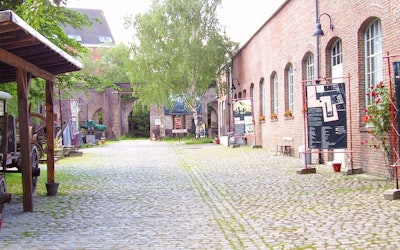
La Fonderie's tour guides invite visitors to discover Brussels so they may better understand and analyse the city.
The urban guided tours with their varied themes address questions deeply rooted in the past but which relate to modern, everyday life such as: work, industrial techniques, urban growth, immigration, social welfare and housing. Some visits concentrate on a neighbourhood; others ask questions related to economic, political or social issues. More than twenty tours are available in several languages for a large and diverse public.
Guided tours associations
 La Fonderie - Brussels museum of Work and Industry
Wittockiana: Museum of book arts and bookbinding
The Wittockiana, which bears the name of its founder and was designed by the architect Emmanuel de Callataÿ, opened its doors in autumn 1983. Avid bibliophile since his adolescence, Michel Wittock built up over his lifetime an impressive collection of books, manuscripts and autographs. Since deciding to share his collection with his bibliophile friends and thus opening the library to the public, the Wittockiana quickly gained a reputation that far exceeded its founder’s hopes and expectations. The circumstances at the time were just right to accelerate the Wittockiana, thanks to the sucess of its publications and expositions with a much larger public than expected as well as thanks to early international recognition, to its status as an indispensable institution in the bibliophilic world. An expansion quickly became necessary to best accomodate this reputation. In 1995 construction of the first floor was entrusted to Wittock’s youngest son Charly Wittock, who had since become an architect.
 Wittockiana: Museum of book arts and bookbinding
MigratieMuseumMigration
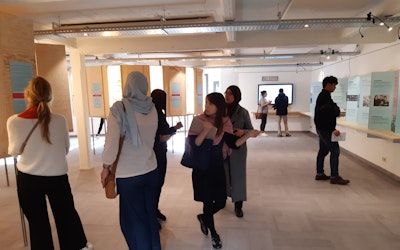
Today, more than 180 nationalities live together in Brussels. The MigratieMuseumMigration gives a permanent home to the stories of the first generation of guest workers, of the earliest inhabitants of the Petit-Château, of the expats, the war refugees, the Europeans who move freely within the EU and many others. It is a warm environment where visitors can discover Brussels and the lives of others through memories and souvenirs. Above all, it is a museum with plenty of room to share your own story.
 MigratieMuseumMigration
MIM - Musical Instruments Museum (MRAH)
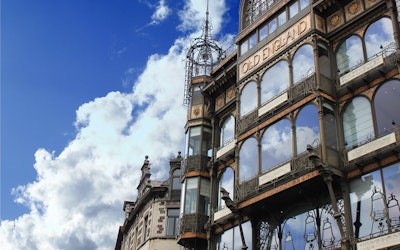
As soon as it opened at the end of the 19th century, the luxurious Old England department store earned an excellent reputation for its highly distinctive building. The entrance to the building is a jewel of the Art Nouveau style, while the rest is in perfect harmony with the neoclassical ensemble on the Place Royale, and just around the corner from the Grand-Place and Central Station, no less!
With a wealth of some 9.000 instruments, some 1.200 of which are on permanent exhibit, the museum's reputation is mainly built on its extraordinary collections.
Once inside, you'll embark on a true tour of the musical world. After your visit, the instruments and their history will no longer hold any secrets: from the viola da gamba from the Court of Brussels to the 20th century theremin, and even including the African kora!
The mim is nothing other than a place to experience music. A visitor's guidance system allows you to explore the thematic tours to the tune of the melodious sound of the instruments presented.
A program packed with concerts, demonstrations and workshops for the young and the not so young makes the mim experience even better.
The mim has its own concert hall, specialized library, museum shop, workshop for restauration and conservation of musical instruments and is crowned by a restaurant with panoramic view over Brussels.
 MIM - Musical Instruments Museum (MRAH)
Fashion & Lace Museum
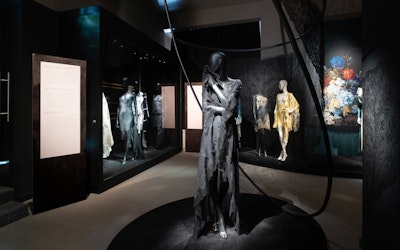
The Fashion & Lace Museum displays its collections by means of major annual exhibitions. These address both the design and the production and social use of the garments.
The exhibitions transport you to diverse and captivating worlds. From items never before exhibited, such as in Masculinities or Back Side, through historical themes, such as the glamour of the 1930s or the bold ‘70s, to exhibitions devoted to Belgian designers such as Carine Gilson and Jean-Paul Lespagnard.
Parallel to these major exhibitions, the museum also offers:
- The Fashion Room, an unparalleled space in Belgium, provides you with the opportunity to understand how a museum builds its collections. Discover exceptional items, not hidden behind glass, in order to see them up close.
- The Lace Room displays remarkable pieces that illustrate the finesse, high quality and beauty of Brussels lace. Explore the history of this type of fabric, so valued by the elites in the 17th century yet no longer in vogue today.
Housed in a series of historic houses at the heart of Brussels, the Fashion & Lace Museum holds some 15,000 pieces from the 16th century to the present. The Museum has the most important collections in the world when it comes to Brussels design and production, which it seeks to position in a Belgian and international context.
Its collections attest to the changes in fashion as well as to a specific era of our culture and our society.
 Fashion & Lace Museum
Municipal Museum of Molenbeek Saint-Jean
The MoMuse exhibits the historical heritage of Molenbeek, from its origins to the present day, with a special emphasis on the 19th and 20th centuries. This small territory of some 6km², has evolved over many centuries. From humble rural beginnings, it experienced an intense industrialisation in the 1840s, followed by a deindustrialisation not without consequences, and finally, at the dawn of the 1960s, an intense urban growth. All these events have profoundly changed the way of life, and essence of the commune.
 Municipal Museum of Molenbeek Saint-Jean
Planetarium of Brussels
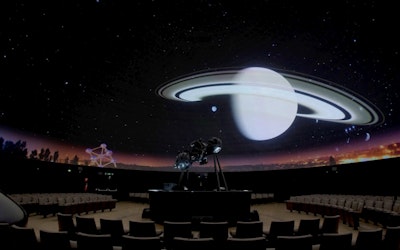
Come and discover the marvels of a starry sky projected on a 23 m diametre, 360° screen. At the Planetarium you can be as close as possible to the launching of a rocket, see Earth from Space, visit the International Space Station, fly over the surface of Mars, approach the rings of Saturn ! And why stop there? Do you dare pass the limits of the Milky Way ? Will you let yourself be taken on an exploration of the extreme boundaries of the Universe?
 Planetarium of Brussels
René Magritte Museum (house)
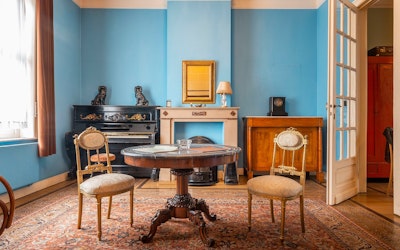
The René Magritte Museum is situated in the house where the famous, surrealist artist lived and worked for 24 years (1930-54). Magritte lived on the ground floor and built in the back of the garden Studio Dongo, where he executed designs for publicity work. He painted most of the time in the living room annex atelier. In that room he would produce more or less half the amount of his paintings and gouaches.
The headquarters of the Belgian Surrealists was also in the Esseghemstraat 135, where they held their meetings on Saturday evenings and where they organized several tableaux vivants.
The Museum of Abstract Art is located in the adjacent building. www.abstractartmuseum.be
Visits at weekends: only via online reservation.
 René Magritte Museum (house)
Sewer Museum
Why not visit the Brussels sewers and the Sewers museum during your next excursion in Brussels. A visit of Brussels' sewerage network - led by experienced guides or ex-workers - is extraordinary, full of surprises, but above all fascinating. The sewers have become vital to our way of life, so much so that it's hard to imagine what it was like before they existed. A visit of the Sewers Museum (and a real sewer!) is therefore an amazing, unusual and thrilling experience.
Brussels' first sewerage network came into use in the 17th century, but they were very limited and a large part of the city's waste still found its way into the river Senne. The river carried waste and carrion and regularly overflowed, or dried out in the summer, leaving behind less-than-pleasant smells.
It was partially due to this, that the government in the second half of the 19th century decided to completely transform the Senne and its neighbouring streets by building great boulevards to cover the insalubrious area. Between the two world wars a second transformation: a portion of the Senne was diverted and then covered over. The sewerage network improved and grew over the years, going from 45 km in 1847 to the 350 km that we have today.
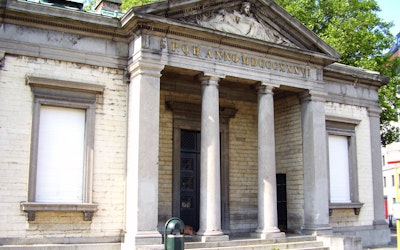
The entrance to the museum is housed in one of the toll pavilions that used to collect taxes on goods that entered the city.
 Sewer Museum
Boghossian Foundation - Villa Empain
Opening of Villa Empain to the public according to several themes of organised activities and events (exhibitions, concerts, conferences, etc.) from 2010. La Fondation Boghossian has its international office in Villa Empain, on which restoration work began in 2008. With the Stoclet building, constructed by the Austrian architect Josef Hoffmann in 1911, Villa Empain is undoubtedly one of the finest masterpieces of Art Deco architecture in Brussels. In 1930, Baron Louis Empain, then aged 21 years, had this 2,500-metre-square mansion built on the prestigious Avenue des Nations, which was later renamed Avenue Franklin Roosevelt. He entrusted the building of this fine house to the Swiss architect Michel Polak, assisted by his colleague Alfred Hoch. The plan designed for Baron Empain on a 55-acre plot included a monumental villa with four façades in polished granite, a garden surrounding a swimming pool ornamented with a pergola, and a caretaker's lodge. The modern and luxurious nature of this structure soon aroused enthusiasm and curiosity. It is true that the variety and quality of the materials used (marble, polished granite, bronze, wrought iron, stained-glass windows and precious woods), the sophistication of the details and the coherence of the whole thing with simple but imposing lines immediately contributed to its patrimonial value.
Cultural centres
 Boghossian Foundation - Villa Empain
Wiels - Contemporary art centre
It was the brewer Léon Wielemans who asked his friend, the architect Adrien Blomme, to design and build the new buildings of his brewery in Forest. It became the leading monument of industrial archaeology in the art deco style, and houses now Wiels, an international laboratory for the creation and the diffusion of contemporary art. Focusing on visual arts, but granting a particular attention to the crossings and interactions with other disciplines, the centre wishes to present contemporary art in all its diversity and to offer a permanent dialogue with the developments and the most recent debates of the art world. The Art centre has a shop, a café and offer an impressive panorama on the city.
Cultural centres
 Wiels - Contemporary art centre
