Permanent collection
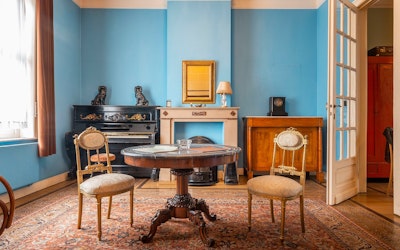
The Wittockiana is the museum of book arts and bookbinding in Brussels. Its collection, which comprises almost 3,000 works, is made up of unique books: all of them carry their material history, the testimony of an artist, a bookbinder, or the mark of their author.
The Wittockiana is the museum of book arts and bookbinding in Brussels. Its collection, which comprises almost 3,000 works, is made up of unique books: all of them carry their material history, the testimony of an artist, a bookbinder, or the mark of their author.
In addition to various collections of precious books from the Italian Renaissance to the present day, the museum houses a documentation centre, a collection of precious rattles and a workshop where bookbinding courses are given daily.
Wittockiana: Museum of book arts and bookbinding
Woluwe-Saint-Pierre
Exhibitions
 Permanent collection
Collection permanente
The Horta Museum is located in the private house and studio of Victor Horta (1861-1947).
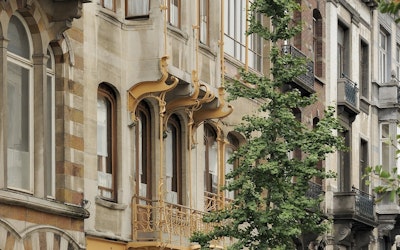
The Horta Museum is located in the private house and studio of Victor Horta (1861-1947). Built between 1898 and 1901 at 23-25, rue Américaine in Saint-Gilles, Brussels, the two buildings are typical of Art Nouveau at its height. The interior decoration has largely been retained, the mosaics, stained glass, and wall decorations forming a harmonious and elegant whole, down to the last detail.
Horta Museum
Saint-Gilles
Exhibitions
Collection permanente
New room on the restoration of Victor Horta's studio house
From 4 February onwards, you can discover the history of the museum's restoration since 1961 in the second drawing studio!
This room, refurbished thanks to the support of the Baillet Latour fund, will be incorporated into the permanent Museum tour.
Thanks to the support of the Baillet Latour Fund, the Horta Museum continues to provide its visitors with access to new areas within the house-cum-studio. Following the opening of the sewing room and darkroom (2018), and the top floor of the house (2019), the first drawing studio was opened in 2020; situated on the second floor of the studio building, it contains Victor Horta’s collection of plaster casts. This year, the second drawing studio, located on the same floor, will also be open to the public !
In this unostentatious room, which was originally occupied by a team of draughtsmen, visitors will be able to learn about the history of the restoration of this house-cum-studio. This room will be incorporated into the Museum tour.
On his return from America after the First World War, Victor Horta left his home and his studios and put both buildings in the Rue Américaine up for sale, moving into a house in the Avenue Louise. The two buildings were divided and the studio became a single family home.
Forty years later, the municipality of Saint-Gilles bought the house (1961). Work on the layout and restorations were carried out by Jean Delhaye, one of Victor Horta’s former students and a champion of his cause. Later, in 1989 and 2014, the second restoration project took place. This was directed by the architect Barbara Van der Wee, together with Françoise Aubry, the Museum’s Curator, whose story of the restoration process was awarded the Europa Nostra prize in 2014.
Through an animated film, the most iconic restoration operations are described in a highly effective and poetic manner, given the complexity of the numerous successive stages involved. It is possible to study this from a more technical angle by analysing and comparing the plans drawn up by Horta, from the first building permit filed in 1898 to the transformations carried out in 1906 and 1908. The longitudinal cross-sections and elevations of the four façades enable us to visualise the spaces that were transformed and restored during the two restoration projects, and they explain the development of elements that were added, dismantled and reconstructed.
In addition to using the film, plans and texts, the aim was also to give this history a tangible quality. Thematic colour charts have therefore been created, displaying the rich palettes of tones and textures to be found in the Museum. These make it easier for visitors to visualise the range of hues used by Horta and to appreciate the refined character of the house.
Each restoration project also brought together professional artisans and restorers, both men and women, who worked behind the scenes. The house-cum-studio has benefitted greatly from their skills and talents. Their portraits are displayed on the end wall as an additional reminder of the importance of expert craftsmanship.
Benjamin Zurstrassen (Curator), Françoise Aubry (Exhibition Curator)
Horta Museum
Saint-Gilles
Exhibitions
 New room on the restoration of Victor Horta's studio house
Lace Room
Through previously unseen pieces, recently acquired or specially retrieved from storage, you will plunge into the extraordinary history of Brussels lace. A fabric that has since disappeared.
Lace is an openwork fabric made with a needle or bobbins. The motifs are connected to each other by a background of stripes or mesh. Initially, it was made by hand and later it was mechanised. Lace is distinguished by its techniques, materials, motifs, colours, etc. Most of the time, it is the place where they were first produced that identifies them: Brussels, Mechelen, Valenciennes, Bruges, and so on.
Brussels lace has gained international renown over the centuries. Its finesse, quality and beauty made it the preferred textile of the elites from the 17th century. It found its way to the greatest royal courts of Europe, adorning the apparel of both men and women.
The lace owned by the museum is an integral part of Brussels’ heritage. Several of the items on exhibit are included in the inventory of moveable heritage of the Brussels-Capital Region. Discover an example of lace whose scalloped edges are made up of alternating leaves and flowers.
To be seen in the Lace Room
A piece of recently acquired needle lace
This scarf in point de gaze and cotton was made with a needle. It dates from the second half of the 19th century, but entered the museum’s collections only in 2021, thanks to the gift of the Hynderick de Theulegoet family.
It uses a wide variety of points, allowing every shade of white to create both the motif and the background. All the parts are made separately and then assembled on a background made with a needle.
The lace of Carine Gilson
This Babydoll slip from the Garden of Lace collection, Spring-Summer 2019, is made of a fuchsia mechanical lace stitched onto silk muslin. The stitching of mechanical lace onto silk is the trademark of the House of Carine Gilson. It thus perpetuates expertise in Brussels lace.
The creator has honoured us by agreeing to become the patron of the Lace Room. The museum regularly exhibits an item from her collections.
Fashion & Lace Museum
Brussels
Exhibitions
 Lace Room
belgisch design belge
A pop-up laboratory where the successive presentations that are sometimes subjective and never exhaustive will be representative of Belgian design. Pieces from different eras, materials, statuses and natures build side by side a history of design in Belgium. For this first selection, objects from the plastic design collection – the particularity of our institution – interact with pieces of modern and contemporary design from the King Baudouin Foundation.
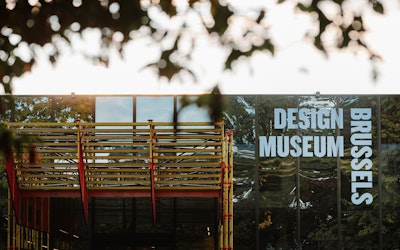
Design Museum Brussels
Laeken
Exhibitions
 belgisch design belge
the Plastic Design Collection
the Plastic Design Collection pays tribute to the diverse and heterogeneous plastic design that has transformed our domectic environment since the 1950s. From material to object and from object to society, the permanent exhibition from this collection develops a cultural history of design.
Design Museum Brussels
Laeken
Exhibitions
 the Plastic Design Collection
A century of Belgian comics
Belgian comic book history shines again at the Comic Art Museum
In the mid-20th century, thanks to the inventiveness of its creators and the dynamism of its publishers, Belgium became the European leader in comic book publishing. To reach a wide readership, characters that were born in periodicals quickly crossed borders and expanded beyond frames. Merchandising, advertising, animated films, cinema, radio, television, video games and more, helped the heroes "made in Belgium" take root in the collective imagination, span generations, and even make their way to Hollywood. The exhibition A Century of Belgian Comics reveals the secrets of this epic journey in an immersive, poetic, and all-ages exhibition.
Comic Art Museum
Brussels
Exhibitions
 A century of Belgian comics
Are you our superhero?
Did you know Belgium has loads of superheroes, like René Magritte, Sandra Kim and the Red Devils!
But today the superheroes are not feeling so super. Can you help these superheroes accomplish their superheroic duties? With some you’ll need to use your imagination and with others you’d better warm up your vocal cords. If you succeed you can earn a real medal just like them! Super cool, right?!
Practical info
For children aged between 8 and 12, accompanied by an adult.
This is a self-guided activity, without a guide or museum staff. You can accompany your group and your children.
BELvue museum
Brussels
Exhibitions
Are you our superhero?
Museum about Belgium and its history
Everyone knows what is typically Belgian. Or do they? Located in the heart of Brussels, next to the Royal Palace, the BELvue museum let you discover today’s Belgium and its history through seven themes and a gallery of more than 200 Belgian objects.
Everyone knows what is typically Belgian. Or do they?
Located in the heart of Brussels, next to the Royal Palace, the BELvue museum let you discover today’s Belgium and its history through seven themes: democracy, prosperity, solidarity, pluralism, migration, language and Europe.
Have a look at the gallery too: there are more than 200 Belgian objects to view, each one forming a tangible memory of Belgium.
Do you want to discover the museum as a family? Yes, you can!
There are several play tours for children aged 3 to 12 (€1/child). Simply ask at the reception desk.
BELvue museum
Brussels
Exhibitions
 Museum about Belgium and its history
After rain comes...
n May 2024, it rained for a whopping 23 days. Few were happy about that new record last spring, but the Sewer Museum is happy to elaborate on this topical issue. With our new theme, we would like to make the general public aware of solutions to manage rainwater more sustainably. Indeed, in cities, water finds it increasingly difficult to penetrate the soil.
Rain is an everyday topic that often comes up. The natural phenomenon continues to occupy our minds, from simple things like our weekend plans to serious concerns like climate change, heatwaves and floods.
But have you ever thought about what exactly happens after a rainstorm? What does rain do to our sewer system in Brussels and what effect does it have on the environment? And wouldn’t we be better off considering rain as a valuable resource rather than something to be disposed of as quickly as possible? All these questions and many more are addressed in the exhibition, through concrete examples and current, innovative solutions.
Sewer Museum
Brussels
Exhibitions
 After rain comes...
Fondation Jacques Brel
A permanent digital exhibition.
A permanent digital exhibition.
16 exclusive short-films, the concert van Jacques Brel in the Casino van Knokke in 1963, more than 50 press articles, 300 photos, 30 manuscripten with 10 written during his youth as "Kho Barim" (1944) and "Conte pour rire et pour pleurer" (1948), 80 personaal documents, 60 witnesses from his family, friends and musicians, the full soundtrack (2 hours) of the interview "Brel Parle" in 1971; and 2 jukeboxes : 330 versions of the 169 recorded songs, en 80 versions in foreig languages of the songs "Quand on n’a que l’amour" and "Ne me quitte pas".
More than 16 hours to dicover the great moments of Jacques Brel's life !
Jacques Brel
Brel Foundation
Brussels
Exhibitions
 Fondation Jacques Brel
Shaping the Possible. Pierre Lallemand, designer
The Design Museum Brussels presents Shaping the Possible. Pierre Lallemand, designer, from 27 November 2026 to 7 March 2027, an exhibition offering an intimate insight into Pierre Lallemand’s work as a designer. Rather than attempting to encompass his entire body of work, which also spans architecture, urban planning and other creative fields, the exhibition explores more than thirty years of research into objects, furniture, materials and manufacturing processes.
Developed in collaboration with Pierre Lallemand, Shaping the Possible, curated by Maude Willaerts (Design Museum Brussels) and independent curator Syuzanna Poulichet, brings together a selection of drawings, models, prototypes, objects, furniture and experimental pieces. This deliberately focused selection offers a closer understanding of his design process, from initial sketches and experiments through to production and the final form.
Trained in Brussels in the late 1970s, Pierre Lallemand developed an approach from the outset that defies strict boundaries between disciplines. His early lighting designs, exhibited in the 1980s at Galerie Théorème in Brussels, already demonstrate his interest in experimentation and in objects that bring together practical use, technology and artistic expression.
His international career further shaped this approach. His experiences in Italy, at the Milan-based architectural practice BBPR, and later in the United States, working with César Pelli, helped him develop a way of thinking about design across different scales. Furniture, objects, bicycles and sailing boats all became fields of experimentation in which drawing, technical expertise, attention to materials and formal exploration come together. It is an approach in which form and function develop hand in hand, as Pierre Lallemand explains: “I don’t believe that form and function should be seen as opposites. Form is already a function in itself. Whether I’m working on a bicycle, a car, a boat or a smaller object, I always seek a strong sculptural presence that incorporates technical and practical constraints from the very beginning. For me, function and form must develop together.”
Although the exhibition deliberately focuses on design, it cannot separate it from what Pierre Lallemand describes as an “architecture of the possible”. For him, objects and architecture share the same approach to questioning our environment: designing is not simply about responding to a need, but about exploring how things might be different.
Through this selection, Shaping the Possible reveals the continuity of an approach developed across design and architecture, without attempting to offer an exhaustive retrospective. It provides a unique opportunity to discover the thinking and practice of a creator for whom every project represents an opportunity for exploration.
Design Museum Brussels
Laeken
Exhibitions
 Shaping the Possible. Pierre Lallemand, designer
Edith Dekyndt x Cristobal Balenciaga
The Fabric Decides
Enter a unique dialogue between Belgian artist Edith Dekyndt and the rarely seen archives of Cristóbal Balenciaga. The exhibition examines the memory embedded in materials and the way they endure through time, revealing unexpected resonances between contemporary art and haute couture. It offers a poetic reflection on the present through gestures, skills, and forms in constant transformation, inviting you to discover this intimate and singular encounter up close.
Bozar - Centre for Fine Arts
Brussels
Exhibitions
 Edith Dekyndt x Cristobal Balenciaga
Jean Brusselmans
Painter by Nature
Bozar presents a major retrospective of the painter Jean Brusselmans (1884-1953), the first comprehensive exhibition of his work since 1980. From the early 20th century onwards, Brusselmans developed a distinctive body of work, independent of artistic trends yet firmly rooted in painterly tradition. His deep connection to the Brabant landscape and his modest way of life are translated into an authentic and recognisable visual language, situated at the intersection of abstraction and figuration. Through some 120 works, the exhibition introduces visitors to the remarkable oeuvre of a still underappreciated Belgian artist. Dialogues with contemporaries such as Fernand Léger, Piet Mondrian and Rik Wouters offer a fresh perspective on his work. The exhibition also highlights Brusselmans' decorative commissions for the theatre, including the monumental sets he designed for the first French-language production of the opera Erwartung by Arnold Schoenberg at the Centre for Fine Arts in 1936. These lost stage designs are brought back to life by the contemporary Belgian painter Kristof Santy (b. 1987), who frequently draws inspiration from Brusselmans in his own work.
Partners: Royal Museums of Fine Arts of Belgium, KBR, MSK Ghent, Musea Brugge, Mu.ZEE, Royal Museum of Fine Arts Antwerp
A ticket for the exhibitions of William Kentridge, Jean Brusselmans, Edith Dekyndt x Cristóbal Balenciaga or Central. Never Alone gives you free access to the exhibition House of Memory / by Basil Al-Rawi on the same day.
Bozar - Centre for Fine Arts
Brussels
Exhibitions
 Jean Brusselmans
Duos en Résonances
From 20 November 2026 to 11 April 2027, Design Museum Brussels presents Duos en Résonances, an exhibition conceived and produced by Wallonie Design, dedicated to collaborations between Belgian designers and craftspeople. It showcases the research, experiments, material samples and prototypes developed by five duos who worked together for more than six months, exploring materials, techniques and applications.
At the intersection of design and craft, Duos en Résonances considers the craftsperson’s workshop as a true laboratory for innovation. Meeting a designer makes it possible to formulate new hypotheses, test processes and challenge established ways of working. Conversely, designers can draw on craftspeople’s expertise, their knowledge of materials and the precision of their gestures. Based on observation, dialogue and experimentation, this process invites each duo to learn from one another and develop a shared exploration. In a society facing major ecological, economic and social transitions, the exhibition also questions how rare skills are passed on and evolve, the availability of raw materials, production methods and the search for more sustainable practices. Duos en Résonances reminds us of the enduring value of the complementarity between design and craft in rethinking the objects and environments of tomorrow.
The exhibition brings together five duos that combine artisanal know-how with contemporary approaches: woodturner Hugh Roche Kelly and designer Heleen Sintobin; glass artist and glassblower Héloïse Colrat and designer Nicolas Verschaeve; gardener and natural dyer Gabriel Beaulieu and designer Sep Verboom; basket makers Jeanny Bouwen and Jefke Geysels with designer Lucile Soufflet; and, finally, leather goods workshop Niyona and design collective Studio Part. Through their exploration of materials, techniques and applications, each duo investigates new ways of designing and making objects.
By hosting the fifth edition of Duos en Résonances, Design Museum Brussels and Wallonie Design reaffirm their shared ambition to provide visibility and opportunities for research and knowledge transfer within contemporary design and craft practices. This collaboration fully aligns with the museum’s mission: to present design as a reflection of the cultural, technical, economic and social developments shaping our society, while supporting a transversal and accessible approach to creativity.
Duos en Résonances is a project conceived and overseen by Wallonie Design, realised with the support of the SofinaBoël Fund for Education and Talent, managed by the King Baudouin Foundation.
The exhibition has been made possible thanks to the support of the Fédération Wallonie-Bruxelles, in partnership with the Design Museum Brussels.
Design Museum Brussels
Laeken
Exhibitions
 Duos en Résonances
Central. Never Alone
The Brussels-based office Central (°2015) develops meaningful architecture that enhances the urban context and contributes to the public realm. For Central, the discipline of architecture is intrinsically relational - never autonomous, but always shaped by context and uses, collaborations and a frame of reference.
From 11 November 2026 to 24 January 2027, Bozar and A+ present Never Alone. The exhibition starts from Central Office for Architecture and Urbanism's first retrospective publication, bringing together an overview of both its completed and ongoing projects. The practice's approach is further enriched by the perspectives of four invited photographers. Adrien De Hemptinne, Maxime Delvaux, Rory Gardiner and Delphine Mathy each offer a unique perspective on a selection of projects.
This exhibition is produced in collaboration between A+ and Bozar, with Buchhandlung Walther und Franz König responsible for publishing the catalogue.
During an inaugural lecture on 10 November 2026, Central's founders, Radim Louda, Paul Mouchet and Valentin Piret, will introduce the exhibition and its accompanying publication.
A ticket for the exhibitions of William Kentridge, Jean Brusselmans, Edith Dekyndt x Cristóbal Balenciaga or Central. Never Alone gives you free access to the exhibition House of Memory / by Basil Al-Rawi on the same day.
Bozar - Centre for Fine Arts
Brussels
Exhibitions
 Central. Never Alone
William Kentridge - I am not me, the horse is not mine
William Kentridge began his artistic career at the height of the political struggle against the apartheid regime in his native South Africa. His work bears witness to a profound commitment – at once social, political and poetic – that continues to shape his artistic practice to this day.
Kentridge’s artistic output ranges from drawings, animated films and sculptures to prints, installations and videos. These works often emerge while he is directing a theatre or opera production, another field to which he devotes his energies. I am not me, the horse is not mine, William Kentridge’s solo exhibition at Bozar, offers a comprehensive overview of his oeuvre from the early 1980s to the present day. Several of his major stage productions receive special attention. The exhibition highlights the performative and collaborative nature of Kentridge’s practice, in which he allows art to evolve into a space for political inquiry, historical reckoning and poetic transformation.
William Kentridge will take over one of Bozar’s major exhibition spaces, create site-specific works, and curate a rich, multidisciplinary programme. This is by no means the first time we have welcomed Kentridge to Brussels. He has a long-standing connection with the city, where he premiered his first opera (Faustus in Africa! 1995), and where Bozar presented his first solo exhibition in Europe in 1998.
Bozar - Centre for Fine Arts
Brussels
Exhibitions
 William Kentridge - I am not me, the horse is not mine
Mangatopia 30: years of manga from Kana!
For thirty years, Kana Editions has been at the forefront of manga’s rise within the French-speaking cultural landscape. Through works that have become essential reading and a remarkable diversity of stories, it has enabled several generations of readers to discover a medium that has become a true global cultural phenomenon.
To mark this anniversary, the Brussels Comic Strip Museum presents MANGATOPIA: 30 Years of Manga from Kana!, an exhibition that invites the public to immerse themselves in this world. Thanks to a thoughtfully designed exhibition layout, a varied selection of works and exclusive accounts from leading mangaka and key figures on the Japanese scene, visitors can discover the many facets of an art form that has constantly reinvented itself.
Conceived as a museum exhibition in its own right, MANGATOPIA brings together in Brussels an exceptional collection of original artwork (some of which has never left Japan) and other rare pieces, offering an enriching insight into the history and aesthetics of manga. For the first time in the Belgian capital, these historical and artistic artefacts are brought together in a single exhibition, allowing the public to appreciate this heritage in all its richness.
Designed for enthusiasts and newcomers alike, MANGATOPIA celebrates creativity, the power of storytelling and manga’s extraordinary ability to bring together different generations and cultures. More than just an anniversary exhibition, it is an invitation to explore a boundless world of imagination and to understand why manga is now one of the most universal cultural languages.
Curator : Frederico Anzalone
A collaboration with Kana and the Kyonto Manga Museum, Kyoto Seika University - international manga research center.
With the support of the Japanese Embassy in Belgium.
Poster : Inio Asano
Comic Art Museum
Brussels
Exhibitions
Mangatopia 30: years of manga from Kana!
Mayhem at the Workshop!
The 2025–2026 Master’s students at ESA Saint-Luc are exhibiting the work they created during their residency
Every year, young artists complete their training in comic art with a project that marks the culmination of several years of research, experimentation and creative work. This exhibition brings together the work of Master’s 2 students from the École supérieure des Arts Saint-Luc in Brussels, produced during their residency at the Comic Art Museum.
For five months, the Comic Art Museum hosted the students in residence at the Maison Marc Sleen. This residency enabled the students to experience life in a studio, build a sense of community, and develop their final-year projects whilst already having one foot outside the school.
By opening its workspaces to these future professionals, the museum reaffirms its commitment to supporting contemporary creativity and nurturing emerging talent. This exhibition offers a glimpse into the richness of the visual and narrative styles currently shaping the young comics scene, whilst introducing readers to comic creators whose first books are set to be published in the coming years.
Comic Art Museum
Brussels
Exhibitions
Mayhem at the Workshop!
Identita - The Story of Czech Graphic Design
From 16 October 2026 to 7 March 2027, the Design Museum Brussels presents Identita – The Story of Czech Graphic Design, an exhibition dedicated to more than a century of graphic design in the Czech Republic. The exhibition explores the role of graphic design in shaping the country’s identity and bears witness to the profound political, social and cultural changes that have marked its history.
Located in Brussels, the capital of Belgium and home to the main institutions of the European Union, the Design Museum Brussels also aims to serve as a showcase for European creativity and the diversity of its design cultures. With this in mind, the museum regularly hosts temporary exhibitions that offer a particular European country’s perspective on its history and design culture. Identita is part of this initiative, inviting visitors to Design Museum Brussels to discover the history and distinctive characteristics of Czech graphic design, while placing them within a broader European context.
Graphic design plays an important role in the way a country presents itself and shapes its identity. Posters, books, magazines, logos and national symbols not only tell the story of their time, but also reflect the social developments of their era. Since the beginning of the 20th century, the development of graphic design in the Czech Republic, and, prior to 1993, in Czechoslovakia, has therefore been closely linked to the country’s turbulent history. The 20th century brought profound changes, from the establishment of an independent state and two world wars to the succession of two totalitarian regimes. After 1989, society and the economy underwent a fundamental transformation, with the transition from a socialist planned economy to a market economy. All of these developments were reflected in the country’s graphic culture.
Through original works and reproductions, the exhibition introduces visitors to some of the most striking examples of Czech graphic design and to the designers behind them. Each work is presented within its cultural, historical and political context. This makes it possible to see how graphic design and society have influenced one another over the years.
Identita at the Design Museum Brussels brings this story to a new audience, offering visitors the opportunity to discover how Czech graphic design evolved over the course of nearly a century in dialogue with politics, technology, everyday life and cultural trends. The exhibition is curated by Filip Blažek and Linda Kudrnovská, in collaboration with curator David Korecký and the team at the Design Museum Brussels for the Brussels presentation.
The touring exhibition Identita is a joint project of the Typo association, Mowshe studio, the Museum of Literature and the network of Czech Centres. The graphic design was created by Marvil studio. The architectural design was developed by Adam Blažek, Jan Kloss and Matěj Činčera of studio Okolo.
Design Museum Brussels
Laeken
Exhibitions
 Identita - The Story of Czech Graphic Design
Michel Butor & Ania Staritsky « Lorsque deux têtes de cochons se rencontrent... »
Wittockiana: Museum of book arts and bookbinding
Woluwe-Saint-Pierre
Exhibitions
Michel Butor & Ania Staritsky « Lorsque deux têtes de cochons se rencontrent... »
Juvenilia – 100 ans de typographie et de livres à La Cambre
Wittockiana: Museum of book arts and bookbinding
Woluwe-Saint-Pierre
Exhibitions
Juvenilia – 100 ans de typographie et de livres à La Cambre
Visit of the Erasmushouse and the Beguinage
Erasmus House–in which the famous philosopher and scholar stayed from May to October 1521–is one of the oldest Gothic houses in the Belgian capital, and hosts a sublime collection of paintings, prints and sculptures by 15th-17th century masters.
The beguinage has been restored in depth and is once again open to visitors each 1st Sunday of the month with guided tours (or on request).
The Erasmus House, beguinage, and collegiate church of Saints Peter and Guido forma magnificent historical ensemble, right in the heart of the commune. Erasmus House–in which the famous philosopher and scholar stayed from May to October 1521–is one of the oldest Gothic houses in the Belgian capital.
It hosts a sublime collection of paintings, prints and sculptures by 15th-17th century masters like Albrecht Dürer, Hugo Van der Goes, Cornelis Metsys... not to mention portraits of Erasmus inspired by Hans Holbein and Quentin Metsys. A rich collection of 16th century books is a nod to the singular humanist’s thinking.
A medicinal plant garden–designed by landscape architect René Pechère–presents around one hundred medicinal plants that were known to 16thcentury physicians. Beyond it stretches a philosophical garden that is home to the works of contemporary artists like Marie-Jo Lafontaine and Bob Verschueren. The beguinage of Anderlecht is Belgium’s smallest.
Founded in 1252, today it consists of two wings framing an enclosed garden with its own well. It housed beguines right up until the French Revolution. The beguinage has been restored in depth and is once again open to visitors each 1st Sunday of the month with guided tours. Discover this entirely restored architectural jewel in a pristine state.
To prepare for your visit, please consult the garden rules on the Erasmushouse & Beguinage website.
Erasmus House & Beguinage Museums
Anderlecht
Exhibitions
 Visit of the Erasmushouse and the Beguinage
Ali Cherri - 'Soul Witness'
For the first time, several of Ali Cherri’s major bodies of work are gathered, including his upcoming film The Sentinel (2026). Alongside, a series of sculptures, watercolour drawings and installations act as a sustained inquiry into how institutions of power — the nation-state, the military and even the museum — shape the ways history is constructed and remembered.
Wiels - Contemporary art centre
Forest
Exhibitions
 Ali Cherri - 'Soul Witness'
Portia Zvavahera: Kuzviramba Mamuri
Zimbabwean artist Portia Zvavahera’s large-scale painterly compositions mix printmaking and painting techniques to record scenes, human figures and ghostly creatures that visit her in the otherworldly plane that opens up when the conscious mind goes to rest.
Zvavahera has developed a distinctive artistic language that embodies the visible and invisible force fields born from her own “inner battles.” Her work, which weaves together personal and collective experience, is animated by a syncretic blend of Christian traditions and the spiritual dimensions of Shona culture in Zimbabwe.
The exhibition in WIELS encompasses early paintings exploring themes akin to the artist’s experience of womanhood, dreamscapes incorporating elements of her surroundings such as leaves and lace, all the way to her most recent venture into ceramics. While hinting at traditions of Zimbabweanfiguration, textile patterns and motifs of religious iconography, the work makes space for a shared, affective vocabulary of loss, love, grief, and joy.
Curator: Sofia Dati
The exhibition is organised in collaboration with Fridericianum, Kassel; David Zwirner, New York, Los Angeles, London, Paris, Hong Kong; and Stevenson, Cape Town, Amsterdam.
Wiels - Contemporary art centre
Forest
Exhibitions
 Portia Zvavahera: Kuzviramba Mamuri