Grand-Place
Often considered the most beautiful square in the world, the Grand-Place of Brussels' reputation precedes it!
Today, it still has a political and administrative function as it houses the City of Brussels Town Hall, which remains the workplace of the mayor and most of their aldermen.
As a prestigious venue, it hosts many festive events - concerts, fairs, folklore events, the Christmas tree and nativity scene, sound and light shows, the flower carpet in the summer, etc. - or symbolic events, such as the celebration of sportsmen and women after fine performances.
Its story began as a market square in the 12th century. Gradually, the square was filled with houses and halls, then primarily made of wood. The splendid Gothic town hall was built in the 15th century in three phases; the same 15th century saw the installation of trade guilds in the houses that border the Grand-Place. Even more so than at present, the square was the nerve centre of Brussels life: economically, as already mentioned, with intense sales activity (several halls devoted to the sale of bread - the present King's House or Broodhuis in Dutch -, meat, linen, etc.), culturally (theatrical performances), judicially (with executions taking place on the square) and, of course, local politics.
It was bombarded by Louis XIV's troops in 1695 and was subsequently almost entirely rebuilt. It underwent further major renovations and modifications during the following centuries, especially in the 19th century, which gave it its current appearance.
The Grand-Place of Brussels has been a UNESCO World Heritage Site since 1998.
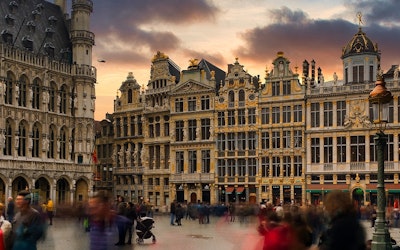 Grand-Place
City of Brussels Town Hall
Of all of the town halls in the country, the City of Brussels town hall is undoubtedly one of the most majestic! This Gothic building, built in the 15th century, is enhanced by its setting on the Grand-Place, often described as the most beautiful square in the world... Admire the accuracy of its proportions, the countless sculptures that adorn its facades and the incomparable brilliance of its tower, whose spire supports the archangel Saint Michael, the city's protector. This City of Brussels laid the first stone of the sumptuous building back in 1401. In 1695, during the bombardment of the city by Louis XIV's troops, the town hall was burned down, but the walls and the tower remained standing. Its reception rooms and aldermen's chambers contain beautiful Brussels tapestries from the 16th, 17th and 18th centuries, sumptuous Gothic woodwork, coats of arms of the old guilds and paintings from the City of Brussels museum's collections.
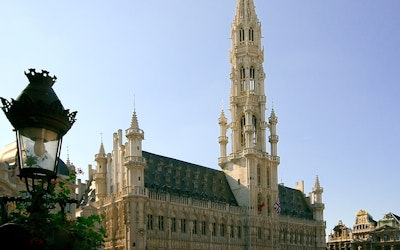 City of Brussels Town Hall
Museum of the City of Brussels / The King’s House
Two majestic buildings that stand opposite each other on Brussels' Grand Place have a long-standing rivalry: on one side you have Brussels' City Hall, and on the other the Broodhuis (Bread House), a UNESCO World Heritage Site which houses the Brussels City Museum. The rivalry between these two buildings is no coincidence. In the 15th century, the Duke of Brabant replaced the 13th century wooden bread market building with a prestigious building that would be a symbol of his power and face off against the imposing building on the other side of the Grand Place that symbolised the city's independence. The building owes its French name of Maison du Roi (King's House) to Charles V, Holy Roman Emperor, who once ruled over a large part of the globe and once owned the Bread House. After being destroyed in the 16th century, it was rebuilt in the Gothic Revival style in the 19th century by city architect Victor Jamaer.
But it's not all about the Broodhuis' history and facade. Inside the Brussels City Museum gives a comprehensive overview of Brussels' history, with particular attention given to the arts, crafts,urbanism and architecture . The original Manneken Pis is also housed here for security reasons, but as for his wardrobe, which is a thousand times larger than even the most passionate fashionista's, you can marvel at that in its dedicated museum on Rue du Chêne - Eikstraat.
Combined ticket giving access to the Brussels City Museum -Maison du Roi and the Garderobe MannekenPis.
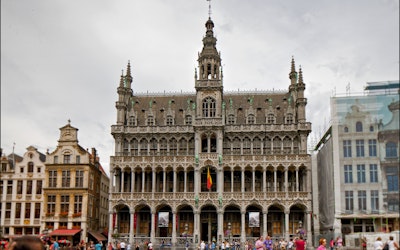 Museum of the City of Brussels / The King’s House
Galeries Royales Saint-Hubert
Initiated by the architect Jean-Pierre Cluysenaer, the spectacular Galeries Royales project took shape in the 1830's. The works, begun in 1846, were almost completed in time for the official opening on 20 June 1847.
The gallery included shops, auditoriums, cafés, restaurants and apartments. The place to be seen for the fashionable, right away, the Royal Galleries of Saint Hubert drew a wide audience, attracted by its luxury brands, elegant cafés and cultural spaces. These included the Théâtre du Vaudeville, the Cinéma des Galeries and the Taverne du Passage, called the Café des Arts until 1892 and the meeting place for painters and writers of the time. The colony of French refugees, like Victor Hugo, Alexandre Dumas, Edgar Quinet and others, would also gather there. The Surrealist painters and artists from the Cobra group were regulars at the venue.
A commemorative plaque recalls the first showing of the Lumière brothers’ motion picture camera on 1 March 1896, in the former dispatch room of the La Chronique daily newspaper (above Pâtisserie Meert, Galerie du Roi).
 Galeries Royales Saint-Hubert
La Monnaie
La Monnaie is the federal operahouse of Belgium, residing in the European capital with an international reputation for producing opera’s, dance, concerts and recitals. Beside housing an own orchestra, choir and in-house ateliers, they can proudly rely on a passionate and dynamic team of coworkers and volunteers.
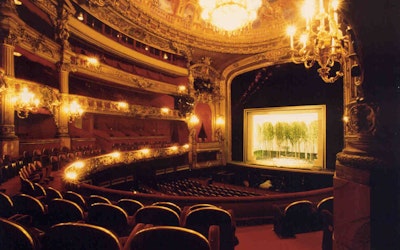 La Monnaie
Comic Art Museum
A world full of comics
An accomplished attraction located in the heart of Brussels, the Comics Art Museum has been honouring the creators and heroes of the 9th Art for 30 years.
The regularly renewed permanent exhibitions and a diversified programme of temporary exhibitions
enable visitors to discover the countless aspects of comics art.
Famous characters lead the way towards new adventures, an encounter with a world where creativity has no limits.
Enhanced by an exceptional Art Nouveau home designed by Victor Horta, the Comics Art Museum is just as much a tribute
to the pioneers as a glimpse of contemporary comics art.
 Comic Art Museum
Brel Foundation
Are you a fan of Jacques Brel who has always wanted to see Brussels from his point of view?
Driven by a spirit of transmission to the new generations, the Brel Foundation gathers, indexes and digitizes archives related to the work and life of Belgian artist Jacques Brel. Located a stone’s throw from the Grand Place, it offers a permanent digital exhibition where visitors can discover the multiple facets of the man’s talent in the Brel Chanteur and Brel Auteur spaces.
Visitors can also discover his career of singer and actor in our movie theater Ciné Brel. 5 screenings a day, Including the mythical concert "Les Adieux à l'Olympia" from 1966.
Movie programmation : http://fondationbrel.be/cine-brel-programmation/
Also, a walking tour with audio guide in the native city of the singer is available for anyone who wants to discover Brussels through one of his most iconic figures.
A little extra bonus: the Brel Foundation regularly organises film clubs in the presence of France Brel, one of the famous singer's daughters (only in French).
Tourist or great connoisseur, everyone Is welcome!
* The Brussels Card only gives access to the permanent exhibition of the Museum. The movie theater and the audio guided walking tour are additional activities.
 Brel Foundation


