Grand-Place
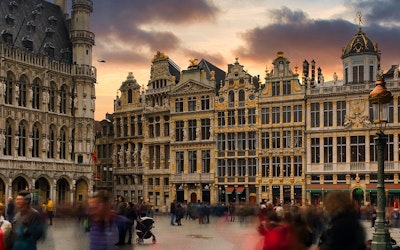
Often considered the most beautiful square in the world, the Grand-Place of Brussels' reputation precedes it!
Today, it still has a political and administrative function as it houses the City of Brussels Town Hall, which remains the workplace of the mayor and most of their aldermen.
As a prestigious venue, it hosts many festive events - concerts, fairs, folklore events, the Christmas tree and nativity scene, sound and light shows, the flower carpet in the summer, etc. - or symbolic events, such as the celebration of sportsmen and women after fine performances.
Its story began as a market square in the 12th century. Gradually, the square was filled with houses and halls, then primarily made of wood. The splendid Gothic town hall was built in the 15th century in three phases; the same 15th century saw the installation of trade guilds in the houses that border the Grand-Place. Even more so than at present, the square was the nerve centre of Brussels life: economically, as already mentioned, with intense sales activity (several halls devoted to the sale of bread - the present King's House or Broodhuis in Dutch -, meat, linen, etc.), culturally (theatrical performances), judicially (with executions taking place on the square) and, of course, local politics.
It was bombarded by Louis XIV's troops in 1695 and was subsequently almost entirely rebuilt. It underwent further major renovations and modifications during the following centuries, especially in the 19th century, which gave it its current appearance.
The Grand-Place of Brussels has been a UNESCO World Heritage Site since 1998.
 Grand-Place
Manneken-Pis
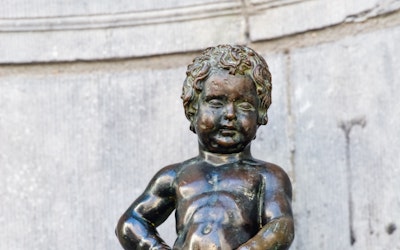
You're no doubt familiar with the Manneken-Pis, the bronze statuette that attracts crowds with cameras just a stone's throw from the Grand-Place. But how did this statue come into being? Originally, the statuette was a simple decoration adorning one of the many fountains that supplied the city with water in the Middle Ages. Although other statues had previously borne its name, the famous little boy relieving himself, who everyone knows today, is the work of Jérôme Duquesnoy l'Ancien, who made it in 1619. He has gone from being a public fountain to a legendary figure. In addition to his purely material appearance, Manneken-Pis has, on various occasions, taken on the symbolic roles of protector of the city and spokesman for the people of Brussels, personifying them in a way that is often mischievous and irreverent. Today, he embodies the rebellious yet modest spirit that reigns in Brussels.
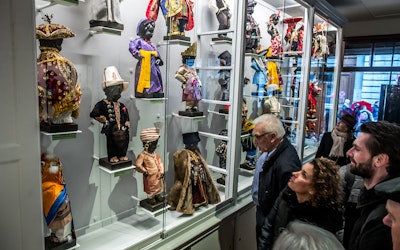
Over the years, it has become customary to dress the statue up for special occasions. Fitted out with numerous costumes and decorations, sometimes gifts from important political figures, his wardrobe includes more than 1,000 pieces, which can be admired at the GardeRobe MannekenPis, a museum opened in 2017. The oldest was donated by the Elector of Bavaria in 1698. Sadly, Manneken-Pis has been subjected to numerous acts of vandalism. The original statuette, stolen and damaged on several occasions, now rests safely in the Brussels City Museum (housed in the King's House on the Grand-Place).
 Manneken-Pis
GardeRobe MannekenPis
The incredible Manneken-Pis dressing room awaits you at 19 Rue du Chêne, a stone's throw away from the famous fountain.
A representative selection of more than one hundred costumes is presented according to seven themes: geography, folklore, charity and citizens’ associations, trades, celebrities and characters, sports and designers. They show the richness of this fabulous and uncommon collection, which today includes nearly 1,000 items! The sculpture’s clothing – which is a tradition dating back to the 17th century! – is still part of the folklore and historical heritage of the city of Brussels.
Combined ticket giving access to the Brussels City Museum -Maison du Roi and the Garderobe MannekenPis.
 GardeRobe MannekenPis
Choco-Story - The Chocolate Museum
Visit to the Choco-Story Brussels museum
Right next to the Grand-Place, Choco-Story Brussels plunges you into the world of cocoa and chocolate, from the origins of cocoa over 5,000 years ago to the famous Belgian praline. You start your journey in the Amazon, passing through an Aztec temple before boarding the Cortes ship that brought cocoa beans to Europe. You'll discover how cocoa is transformed into chocolate and how it is sublimated by our chocolatiers. The tour ends with a traditional praline-making demonstration and tasting sessions. The audioguide, available in 11 languages, is included in the admission price.
Adult admission, without discount: €14/ person
 Choco-Story - The Chocolate Museum
Frietmuseum Brussels
Frietmuseum Brussels is a fun, educational and tasty museum that takes visitors on a journey through the history, culture and traditions of this emblematic Belgian dish. With over 1,600 exhibits, old posters, interactive games, films and testimonials from fry makers, you can discover not only the history of the potato, but also the evolution of fries over time, and the secrets of perfect cooking.
Spread over three floors, the audio tour (available in 11 languages) starts in Peru, the origin country of the potato, before taking you on a world tour tracing the history of potato cultivation in South America and Europe.
 Frietmuseum Brussels
Musée Magritte Museum
The Musée Magritte Museum, located in the heart of Brussels, brings together the world's largest collection of the renowned surrealist artist René Magritte: 230 works and archives are displayed. The multidisciplinary space houses paintings, gouaches, drawings, sculptures, and painted objects, as well as advertising posters, musical scores, photographs and films. The Museum also has the most important collection from the artist’s "vache" period.
The selection of works exhibited in the Royal Museums of Fine Arts of Belgium is constantly expanding with a changing selection of external loans. With the support of Belgian and foreign museums as well as private collectors, works are being made available that have previously never been exhibited. The visitor can thus discover many treasures that are still in private possession.
The Musée Magritte Museum has already received 8 nominations and prizes. Every year more than 300,000 visitors come here for all over the world to discover the life and the works of René Magritte.
 Musée Magritte Museum
BELvue museum
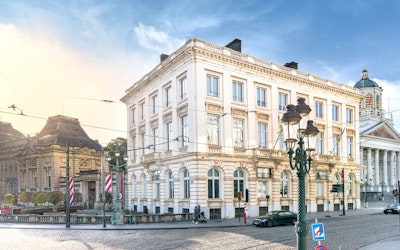
Chips, beer and chocolates... surely there is more to Belgium than that? Democracy, prosperity, solidarity, pluralism, migration, languages and Europe: these are the themes used by the BELvue Museum to help you to discover Belgium. Each one is developed through present-day testimonials and then traced right through history. This is a modern, original way of gaining a fuller understanding of modern-day Belgium.
Have a look at the gallery too: there are more than 200 objects to view, each one forming a tangible memory of Belgium. Here are just a few examples: a lithograph by Magritte, a motorcycle, crystal vases by Val Saint-Lambert, and a football signed by the Red Devils. The very essence of Belgian-ness!
Speciale openingstijden op schoolvakanties en feestdagen 9.30 tot 17.00 uur
24/12 en 31/12 9u30 tot 16u00
Het BELvue Museum is elke woensdag vanaf 14u en de eerste zondag van de maand gratis toegankelijk.
 BELvue museum
MIM - Musical Instruments Museum (MRAH)
As soon as it opened at the end of the 19th century, the luxurious Old England department store earned an excellent reputation for its highly distinctive building. The entrance to the building is a jewel of the Art Nouveau style, while the rest is in perfect harmony with the neoclassical ensemble on the Place Royale, and just around the corner from the Grand-Place and Central Station, no less!
With a wealth of some 9.000 instruments, some 1.200 of which are on permanent exhibit, the museum's reputation is mainly built on its extraordinary collections.
Once inside, you'll embark on a true tour of the musical world. After your visit, the instruments and their history will no longer hold any secrets: from the viola da gamba from the Court of Brussels to the 20th century theremin, and even including the African kora!
The mim is nothing other than a place to experience music. A visitor's guidance system allows you to explore the thematic tours to the tune of the melodious sound of the instruments presented.
A program packed with concerts, demonstrations and workshops for the young and the not so young makes the mim experience even better.
The mim has its own concert hall, specialized library, museum shop, workshop for restauration and conservation of musical instruments and is crowned by a restaurant with panoramic view over Brussels.
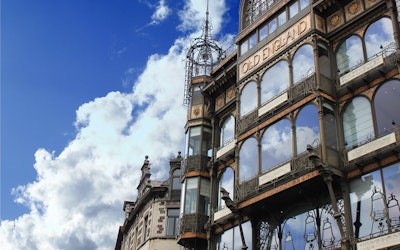 MIM - Musical Instruments Museum (MRAH)
Royal Museums of Fine Arts of Belgium
The Royal Museums of Fine Arts of Belgium assemble six different museums: the Oldmasters Museum, Meunier Museum, Wiertz Museum and the Magritte Museum.
 Royal Museums of Fine Arts of Belgium
Bozar - Centre for Fine Arts
It’s impossible to talk about culture in Belgium without mentioning the Centre for Fine Arts located in Brussels. Whether it comes to exhibitions, concerts, theater performances, movies or projects concerning literature and architecture, BOZAR will always put originality and innovation first. They prove to keep a finger on the pulse with their varied and sophisticated programme. Besides emphasizing the importance of creation, quality and a rich artistic offering, BOZAR is especially concerned about the total experience of the visitors.
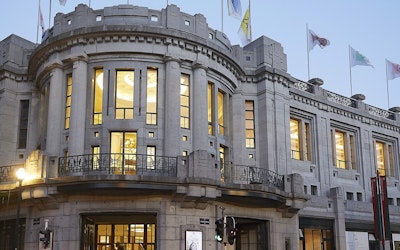 Bozar - Centre for Fine Arts
Coudenberg Palace
Once upon a time, the Coudenberg Palace towered over the city of Brussels. Charles V and many other of the most powerful rulers ever to reign in Europe made this princely residence their home between the 12th and 18th centuries, until it was consumed by a terrible fire. Every trace of this prestigious palace simply disappeared underground for many years. Today, however, these ruins constitute a fascinating archeological site incorporating a network of underground passages and chambers.
When you visit it you can explore the principal buildings of the palace and enjoy a stroll along the Rue Isabelle, which is now underground. In the Coudenberg Museum, located in Hoogstraeten House, the finest of the archeological discoveries made during the various excavations of the Coudenberg site are displayed.
 Coudenberg Palace
Brussels Park
Brussels Park, known for many years previously as the Royal Park, is the oldest park in the region which became a public park. Built on the ruins of the park of the Dukes of Burgundy and the Governors of the Spanish Netherlands, it stands proudly between the Federal Parliament and the Royal Palace, symbols of power and the monarchy. This spot, was once the site of fierce battles for the people of Brussels during the revolution in 1830.
Designed in a neo-classical style by architect Guimard and gardener Zinner, it opens onto the large pond and then offers you wide alleys, symmetrical alignments and stunning views. You'll find statues of Greco-Roman mythology, the Vauxhall, a bandstand, the Théâtre Royal du Parc, the Guinguette Royale and even Kiosk Radio, a bar where you can dance beneath the trees!
 Brussels Park


.jpg/_jcr_content/renditions/cq5dam.thumbnail.48.48.png)





.jpg/_jcr_content/renditions/cq5dam.thumbnail.48.48.png)


