Collection permanente
The Horta Museum is located in the private house and studio of Victor Horta (1861-1947).
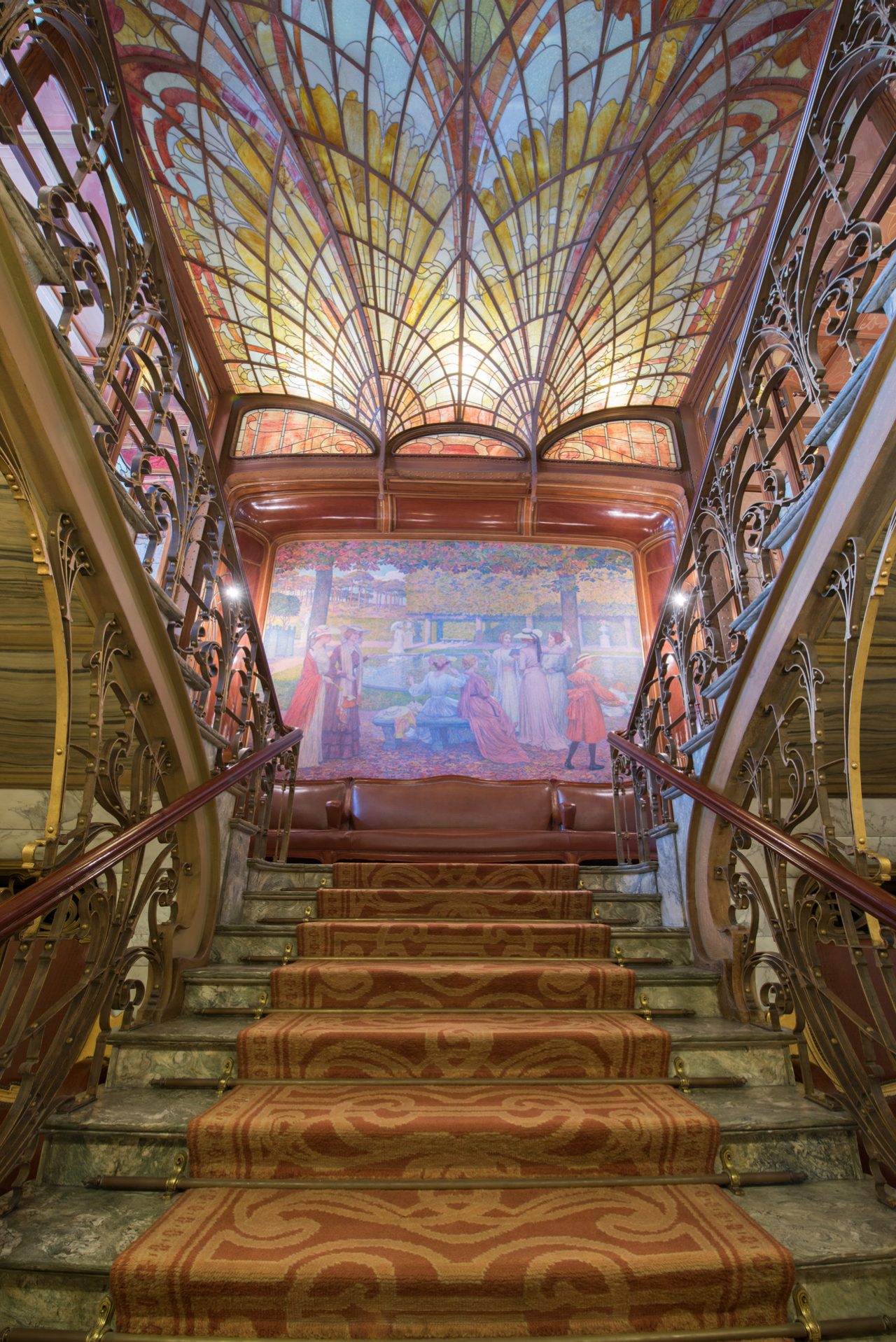
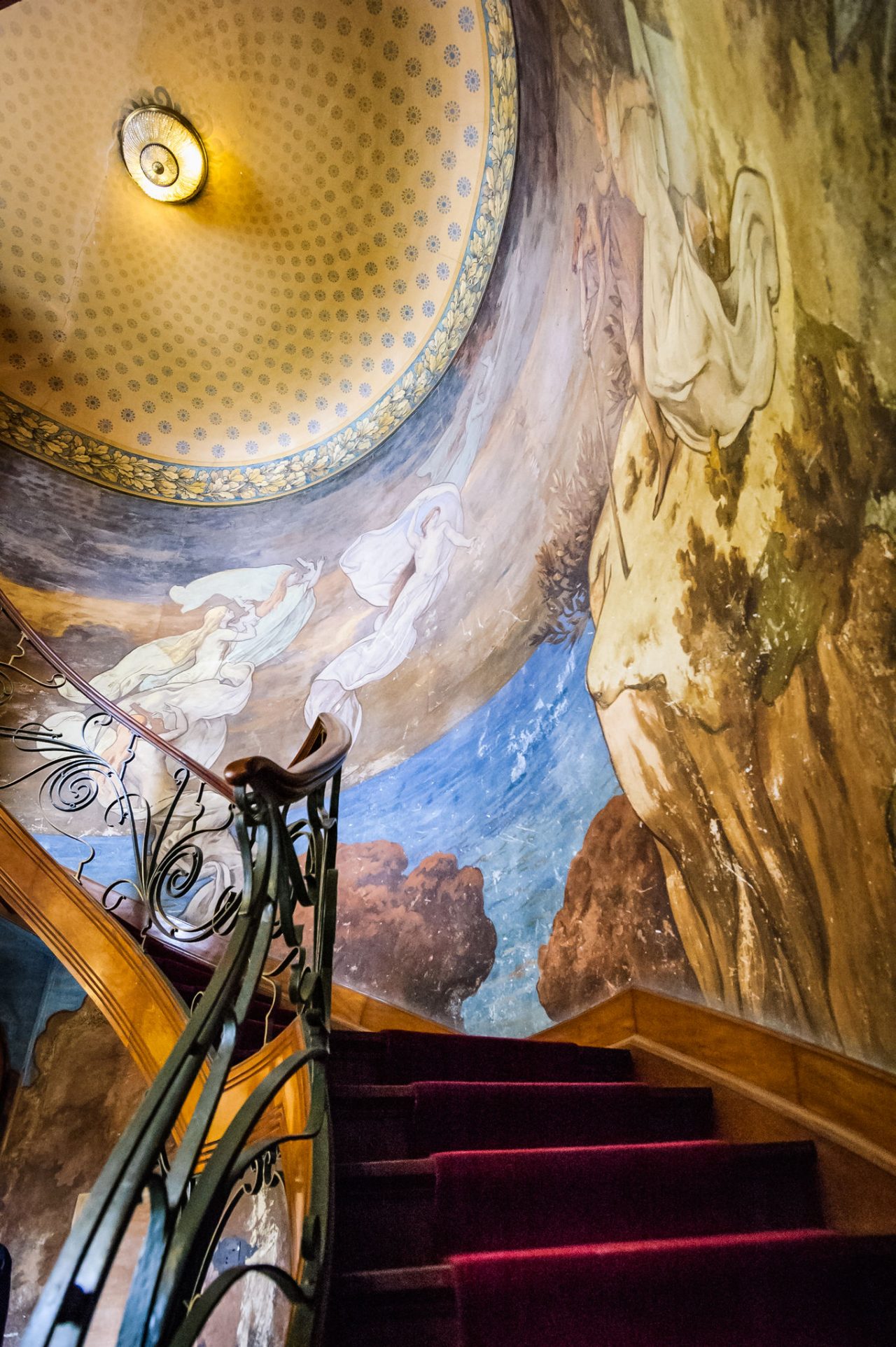
The Horta Museum is located in the private house and studio of Victor Horta (1861-1947). Built between 1898 and 1901 at 23-25, rue Américaine in Saint-Gilles, Brussels, the two buildings are typical of Art Nouveau at its height. The interior decoration has largely been retained, the mosaics, stained glass, and wall decorations forming a harmonious and elegant whole, down to the last detail.
Horta Museum
Saint-Gilles
Exhibitions
Collection permanente
New room on the restoration of Victor Horta's studio house
From 4 February onwards, you can discover the history of the museum's restoration since 1961 in the second drawing studio!
This room, refurbished thanks to the support of the Baillet Latour fund, will be incorporated into the permanent Museum tour.
Thanks to the support of the Baillet Latour Fund, the Horta Museum continues to provide its visitors with access to new areas within the house-cum-studio. Following the opening of the sewing room and darkroom (2018), and the top floor of the house (2019), the first drawing studio was opened in 2020; situated on the second floor of the studio building, it contains Victor Horta’s collection of plaster casts. This year, the second drawing studio, located on the same floor, will also be open to the public !
In this unostentatious room, which was originally occupied by a team of draughtsmen, visitors will be able to learn about the history of the restoration of this house-cum-studio. This room will be incorporated into the Museum tour.
On his return from America after the First World War, Victor Horta left his home and his studios and put both buildings in the Rue Américaine up for sale, moving into a house in the Avenue Louise. The two buildings were divided and the studio became a single family home.
Forty years later, the municipality of Saint-Gilles bought the house (1961). Work on the layout and restorations were carried out by Jean Delhaye, one of Victor Horta’s former students and a champion of his cause. Later, in 1989 and 2014, the second restoration project took place. This was directed by the architect Barbara Van der Wee, together with Françoise Aubry, the Museum’s Curator, whose story of the restoration process was awarded the Europa Nostra prize in 2014.
Through an animated film, the most iconic restoration operations are described in a highly effective and poetic manner, given the complexity of the numerous successive stages involved. It is possible to study this from a more technical angle by analysing and comparing the plans drawn up by Horta, from the first building permit filed in 1898 to the transformations carried out in 1906 and 1908. The longitudinal cross-sections and elevations of the four façades enable us to visualise the spaces that were transformed and restored during the two restoration projects, and they explain the development of elements that were added, dismantled and reconstructed.
In addition to using the film, plans and texts, the aim was also to give this history a tangible quality. Thematic colour charts have therefore been created, displaying the rich palettes of tones and textures to be found in the Museum. These make it easier for visitors to visualise the range of hues used by Horta and to appreciate the refined character of the house.
Each restoration project also brought together professional artisans and restorers, both men and women, who worked behind the scenes. The house-cum-studio has benefitted greatly from their skills and talents. Their portraits are displayed on the end wall as an additional reminder of the importance of expert craftsmanship.
Benjamin Zurstrassen (Curator), Françoise Aubry (Exhibition Curator)
Horta Museum
Saint-Gilles
Exhibitions
 New room on the restoration of Victor Horta's studio house
EDEN 2.023 · A New Perspective on Paradise
Within the framework of Art Nouveau Brussels 2023, twenty-five 80x120 photos by the photographer Violaine Alghisi mixing dance and architecture have been selected with the eyes and the heart for an immobile journey in the intimacy of the more confidential Masterpieces of Belgian Art Nouveau.
The work produced by photographer Violaine Alghisi for this new exhibition expresses in a singular way both the architectural dimension of bodies and the organic corporality of Art Nouveau architecture. A proposal of in-between for a new perspective on a Paradise free of any religious dimension, except to consider its natural immanence.
With EDEN 2.023, Violaine Alghisi exhumes with a gentle lightning the whole message of liberation and questioning of the classical norms and codes carried by the Art Nouveau in its time.
Silhouettes, sometimes sensual, sometimes enigmatic, but always free, stand out like ghosts brought back to life on the walls and stained-glass windows of these monuments, reflections of a bygone era but nevertheless very present.
In her photos, the calm of the place becomes a pretext for transgressing the common rules of museums: here, we dance on the furniture of the Villa Autrique, we choreograph the furniture of Hamesse and so much the worse for the frozen whiteness of the tablecloths, it is the majesty of the bodies in movement that asserts itself standing on the dining room table!
A tender but impetuous artist, she gives us a look that mixes past and present, still and animated, which has chosen the more confidential Masterpieces of Belgian Art Nouveau as its setting.
Her approach questions the biases of style to offer a delicately punk vision of a newly postulated life of a Belle Époque revisited...
Created in the context of Art Nouveau Brussels 2023, the exhibition is accessible free of charge during the opening hours and days of the Ultieme Hallucinatie.
Twenty-five 80x120 photos, colour or black and white, selected with the eye and the heart for an immobile journey into the mysteries of the Hôtel Cohn-Donnay, the Maison Autrique, the Hôtel Hannon, the Horta Museum and the Horta Chapel, or the Maison des Médecins de Charleroi...
So many new stories told in light that intertwine to join those of the Hôtel Cohn-Donnay.
And you, what will your story be there?
The Artist
Violaine Alghisi is a visual artist and photographer from Brussels with Italian origins. She is a reflection of her mixed cultures...
Between Northern Surrealism and Latin Poetry, soft and baroque, her photographic adventures give a glimpse of powerful impressions of sensuality, strength and assumed tenderness.
At the antipodes of the search for performance, her intimate work favours instinct and feeling, with the encounters that punctuate his life as material...
De Ultieme Hallucinatie: Back to the roots
The Hotel Cohn-Donnay - better known today by the name of the Brasserie it houses - is a symbol of Art Nouveau and is reviving its long tradition of art and culture. After having been the setting for the music and intimate life of the virtuosa Marie Pleyel, and then a mecca for the nightlife of the 1980s, it is now destined to highlight and preserve the stories and heritage it houses.
Reopened to the public in 2019 by a lover of beautiful stones and the art of living, the building is resolutely accessible to all and now offers, in addition to its Belgian brasserie, event spaces and meeting rooms. It has also become a refuge for Brussels storytellers every third Friday of the month, the venue for the Hallucinated Visits by the Brussels zieverologist Phillipe Baudot, as well as for jazz projects orchestrated by Bénédicte Williot.
The long work of preserving and restoring the architectural heritage and the somewhat crazy project of creating the Marie Pleyel Museum are also well underway. However, it is possible that the opening of our Jazz Cabaret and our first classical concerts will precede them. A little time, a lot of work and a lot of fun ahead...
For Art Nouveau Brussels 2023, we are pleased to produce and host an exhibition combining the architecture of bodies with Art Nouveau and to host the closing night of the BANAD festival.
What do all these proposals have in common? Perhaps a desire for excellence and a little extra soul.
And if you too came to join the Ultieme to the Pleasant...
Within the framework of Art Nouveau Brussels 2023, twenty-five 80x120 photos by the photographer Violaine Alghisi mixing dance and architecture have been selected with the eyes and the heart for an immobile journey in the intimacy of the more confidential Masterpieces of Belgian Art Nouveau.
De Ultieme Hallucinatie
Saint-Josse-Ten-Noode
Exhibitions
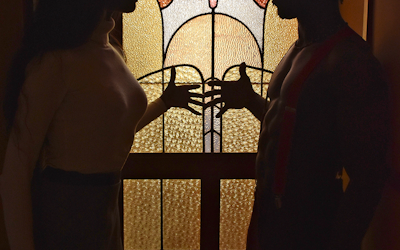 EDEN 2.023 · A New Perspective on Paradise
Utopie au Mont des Arts, visite scénarisée
devant la statue équestre du Roi Albert Ier, Mont des Arts
Brussels
Guided tours
 Utopie au Mont des Arts, visite scénarisée
Si t'y danses — balade 3 : Danser les volutes
Saint-Gilles
Saint-Gilles
Guided tours
 Si t'y danses — balade 3 : Danser les volutes
Stoclet 1911 - Restitution
Stoclet 1911 - Restitution is now on show at LAB·AN x Hotel van Eetvelde, following its debut at the Art and History Museum in Brussels. The exhibition presents a never-before-seen digital reconstruction of the interiors as they looked around 1911. It's a unique opportunity to explore the remarkable décor of this building, which has been on UNESCO's World Heritage List since 2009.
Result of a collaboration between urban.brussels, the ULB - Architecture Faculty La Cambre Horta and the Art & History Museum, initiated to mark the Brussels Art Nouveau Year 2023, this exhibition and the digital reconstruction presented in the form of a film are designed to enable visitors to explore the interiors of the Palais Stoclet, which has been on the very select list of Brussels buildings included on UNESCO's World Heritage List since 2009, and yet is still little known to the general public.
The virtual reconstruction of this palace (which reproduces the state of the palace between 1911 and 1918 and does not represent the existing situation) is based on precise archival sources and a detailed architectural analysis of its spaces, a task that kept the ULB team of experts busy for almost two years. This scientific study of the Stoclet Palace is part of a close collaboration between experts from the Brussels-Capital Region (Urban.brussels) and ULB (alICe Laboratory). Its realism reinforces the impression that visitors are being immersed in the building's original state, between 1911 and 1918: the public is discovering the palace exactly as the couple Suzanne Stevens and Adolphe Stoclet dreamed it would be.
Through this research, the Brussels Region hopes not only to make this knowledge accessible to as many people as possible, but also to build up a scientific information base on the spatial nature of the building and its remarkable decorations. Behind this digital documentation project, the research carried out by the AlICe laboratory at the Faculty of Architecture (ULB) aims to consolidate a knowledge base around the three-dimensional representation of the building, which will be enriched over time. The digitisation of the floors, service areas and gardens of the Palais Stoclet will be added to the work already carried out. The work of reconstituting the original art collection will also continue, so that this digital double of the building can gradually be reintegrated.
Hôtel van Eetvelde X LAB·AN
Brussels
Exhibitions
 Stoclet 1911 - Restitution
Foundation Frison Horta "A Living museum"
Maison Muse L'art Nouveau Victor Horta 1894
Second House of Victor Horta Constructed for his best friend Maurice Frison lawyer of the court of Belgium & Social and Civil reformer of Belgium. The house is in the heart of City center Only living Museum in the world Of Horta.
Foundation Frison Horta is an Active Cultural Bridge Between East & West Restoring, Preserving and Sustaining Rich Art & Craft of the By-Gone Era, in an Artistic Art-de-Vivre form. “Excellence in Craftsmanship and Métiers d’Art”. The Foundation Aims to Foster Greater Understanding and Appreciation of the Rich Heritage & Cultural Traditions of the East particularly of Indian Sub-continent In Europe and vice versa.
Foundation Frison Horta is working Extensively in Restoring the image of Brussels with Art Nouveau as its National Identity to a Global Audience.
Maison Frison is the Only one of a kind house of Victor Horta that was Constructed for Double Function Maurice Frison ( Lawyer of the Court of Belgium) office and living space. Foundation frison Has Continued the double function of Horta with Foundation museum activities and the living space making it a One of a kind in the world “A Living Museum” an Exceptional Unique Time capsule of 19th Century Total Art, Art Nouveau Gem of Victor Horta!
Entry Fee: 39 Euros (Minimum 2 person)
Foundation Frison Horta
Brussels
Guided tours
 Foundation Frison Horta "A Living museum"
Art nouveau versus Art Deco? 1850–1950: a century in 31 seats
Dive into a century of revolutions in design and architecture! Between Art Nouveau and modernism, discover 31 iconic chairs revealing the evolutions and continuities that have shaped the way we live.
From June 25, 2026, to January 10, 2027, the Horta Museum presents the exhibition Art Nouveau versus Art Deco? 1850–1950: A Century in 31 Seats. The exhibition features thirty chairs by leading designers, from Victor Horta and Henry van de Velde to Le Corbusier and Marcel Breuer, offering insight into a century of transformation in design and architecture in the Western world. Although Art Nouveau and Art Deco are often seen as opposites, this exhibition brings them into dialogue through the chair, an iconic object in interior architecture. The chair serves as the central thread and illustrates how designers are connected across generations.
Horta Museum
Saint-Gilles
Exhibitions
Art nouveau versus Art Deco? 1850–1950: a century in 31 seats
Houses in Comic Strips
The Autrique House is the ideal setting for a discussion on houses … in a graphic novel!
But when you think about it, what actually is a house? The word 'HOUSE' has several meanings. It can therefore be considered from several different perspectives: architectural, social, domestic, political…
With "Houses in Comic Strips", visitors can discover how comic book artists have explored this concept of a “house”. From History to decoration, and from the inhabitants themselves to the interiors of their homes.
From June 2026 to February 2027, five lectures will broaden the theme and open new perspectives: from the history of the Brussels townhouse to the story of a passionate Victor Horta enthusiast.
With the participation of: Romane Armand, Anne Baltus, Frédéric Bézian, Antoine Carcano, Baudouin Deville, Loïc Gaume, Ben Gijsemans, Jeroen Janssen, Adrien Le Strat, Benoît Peeters, Émilie Plateau, Elisa Sartori, Éléonore Scardoni, Étienne Schréder, François Schuiten, Judith Vanistendael, Patrick Weber
Autrique House
Schaerbeek
Exhibitions
 Houses in Comic Strips
From Home to heritage
Hannon House
Saint-Gilles
Exhibitions
 From Home to heritage
Visit the Maison Hannon
A singular work of Art Nouveau, Maison Hannon is the sum of the tastes and passions of its commissioners, Édouard and Marie Hannon.
Visiting the Maison Hannon is to discover the personal home of a couple, Marie Debard and Édouard Hannon, who together with their friend, the architect Jules Brunfaut, designed an Art Nouveau masterpiece. The interior was conceived as an enclosed, dreamlike and symbolic universe.
Visiting the Maison Hannon also includes a tour of the temporary exhibition "Belgian Art Nouveau", which presents Art Nouveau in all its diversity through works from the most important Belgian collections. For more information, visit the Maison Hannon website.
Visiting the Maison Hannon also means becoming a patron of the arts. By purchasing a ticket, each visitor contributes 2 euros to the continuation of the restoration.
To ensure a safe and enjoyable visit, the Maison Hannon has a limited capacity. Online booking is therefore strongly recommended, but spontaneous visits are of course welcome. To book your ticket, go to the "Visit" page on the Maison Hannon website.
Hannon House
Saint-Gilles
Exhibitions
 Visit the Maison Hannon
Individual tour of Hotel Solvay
Solvay House
Ixelles
Guided tours
 Individual tour of Hotel Solvay
Lignes de fuite
I Want My Inner Dog To Wear Pearls
Valeriu Andrisca
2025 - 37' - Belgium
vo: en-ro
sub: fr-nl
While staying in Romania, siblings Victor and Alexandra discover that the weaving trade, a part of their family history, can offer a space for debates about gender, tradition and resistance. Facing hostility from the villagers, they will understand the importance of queer solidarity.
-----
Ceasefire, they are crossing
Tony Mouawad
2025 - 33' - Belgium - Lebanon
vo: ar
sub: fr-en
In Beirut, Jado, a 57-year-old trans woman and a leading figure in the LGBTQIA+ community, has to fight every day just to survive.
-----
KOTOWARI
Coralie Watanabe Prosper
2025 - 23' - France
vo: ar-zh-hant-fr-ja-sr
sub: fr-en
An anxiety‑filled day at the immigration counter. An exploration of the fragile spaces between identity, belonging, and the social structures that shape our lives.
Cinema Nova
Brussels
Cinema
 Lignes de fuite
Individual tour of Hotel Van Eetvelde
Nestled in a UNESCO World Heritage building designed by the architect Victor Horta, the Art Nouveau Interpretation Centre (LAB-An) offers four exhibition spaces. These will offer you different keys to understanding this fascinating artistic and cultural movement.
The discovery of the Van Eetvelde Hotel and its extraordinary dome will undoubtedly be the highlight of your visit.
Important Notice
Disabled access :
Unfortunately, the buildings are not accessible to people with reduced mobility (Mainly because of the presence of many stairs that are difficult to negotiate - between three and fifteen steps)
Reduced rates :
Please note that in order to benefit from the reduced rates, you will be asked for proof on arrival.
Guided tours :
The following rates give you access to a self-guided tour of the van Eetvelde complex (Hotel, Office and exhibition spaces).
Guided tours are available for groups by prior arrangement via info@lab-an.be.
Photos authorised, without flash and only on smartphone. For all requests for professional photo shoots, please contact info@lab-an.be.
Hôtel van Eetvelde X LAB·AN
Brussels
Guided tours
 Individual tour of Hotel Van Eetvelde
Art Nouveau dans le Quartier des Squares
Au bas du Square Marie Louise, à côté de la statue de La Cigale
Brussels
Guided tours
 Art Nouveau dans le Quartier des Squares
Hidden Art Nouveau in Saint-Gilles
From a small medieval village teeming with vagabonds and brigands to today’s trendy district, we take you through the streets and alleys of Saint-Gilles, following in the footsteps of its past and its architectural boom.
We invite you on a fascinating stroll through the little-visited neighborhoods of Saint-Gilles and Forest, rich in architectural masterpieces.
WHAT ARE YOU GONNA SEE ?
From a small suburb of Brussels in the 13th century, where merchants passed through, to major transformations during the Industrial Revolution, the face of this commune has changed enormously over the centuries.Today’s hyper-trendy district, thanks in particular to attractions such as the Parvis and the Barrière, Saint-Gilles is nonetheless a place rich in history and architecture.
>Numerous works by well-known architects such as Jef Lambeaux, Albert Ciamberlani, Louise de Hem, Julien Dillens and others,…
>The famous Hôtel Hanon, Saint-Gilles City Hall, “Parc de l’Abbé Froidure”,...
>A stroll through the history of this town, from its medieval bandit hideout to today's trendy neighbourhoods.
Public tour in english every first sunday of the month
Voluntary cost : Pay 3€ when you book, and the rest directly to the guide at the end of the tour (voluntary amount)
An original guided tour of Brussels By Foot
In front of Notre-Dame de la Providence church
Saint-Gilles
Guided tours
 Hidden Art Nouveau in Saint-Gilles
Discover the Art Nouveau sgraffito technique at La Maison Cauchie
The Maison Cauchie invites you to discover the Art Nouveau sgraffito technique, a speciality of the Ateliers Cauchie during the Belle Époque.
Special programme of the day: guided tours of the Maison Cauchie followed by a demonstration of the sgraffito technique by two heritage craftswomen.
Tickets are available through our standard ticketing system.
10am, 11.30am, 14pm, 15.30pm : guided tour in FRENCH
14.45pm : guided tour in DUTCH
10.45am, 16pm with : guided tour in ENGLISH
Interested in a private tour with sgraffito demonstration? Contact us: sgraffito@cauchie.be
Cauchie House
Etterbeek
Guided tours
 Discover the Art Nouveau sgraffito technique at La Maison Cauchie
Brussels, Belle époque & Art Nouveau
At the turn of the 19th and 20th centuries, Brussels underwent a series of upheavals! The Industrial Revolution, the Congo and urban development were to transform the lives of the people of Brussels!
During the Belle Époque, economic life flourished, the arts flourished and interest in cultural activities grew. An artistic movement, perhaps the most emblematic of the period, was born in Brussels: Art Nouveau...
WHAT WILL YOU DISCOVER?
We take you back over 120 years, to a district that in many ways was a privileged witness to the Belle Époque...
With a particular focus on the Art Nouveau movement, we'll retrace the major stages of this urban transformation to give you a better understanding of the era, as well as more current urban issues in a district that didn't stop changing with the Belle Époque - far from it!
- Numerous projects by well-known architects such as Paul Cauchie, Edouard Raemakers, Gustave Strauven,...
- An insight into the history of a neighborhood that witnessed the urban transformations of the early 20th century.
- The Cinquantenaire Palace and Park, the monument “to the memory of Belgians who died for colonial work”, by Thomas Vinçotte, the “Pavillon des Passions Humaines” (V Horta), the famous Maison Saint-Cyr,...
- ...
Regular tour in english every second sunday of the month at 11 AM
Registration fee: 3€ / pers - Remainder to be paid on site (free amount)
Private tour when you want : info@brusselsbyfoot.com
An
Merode - On the esplanade in front of the Park entrance, next to the roundabout
Etterbeek
Guided tours
 Brussels, Belle époque & Art Nouveau
Atelier broderie thématique à la Maison Cauchie
Cauchie House
Etterbeek
Courses and workshops
 Atelier broderie thématique à la Maison Cauchie