Bozar - Centre for Fine Arts
It’s impossible to talk about culture in Belgium without mentioning the Centre for Fine Arts located in Brussels. Whether it comes to exhibitions, concerts, theater performances, movies or projects concerning literature and architecture, BOZAR will always put originality and innovation first. They prove to keep a finger on the pulse with their varied and sophisticated programme. Besides emphasizing the importance of creation, quality and a rich artistic offering, BOZAR is especially concerned about the total experience of the visitors.
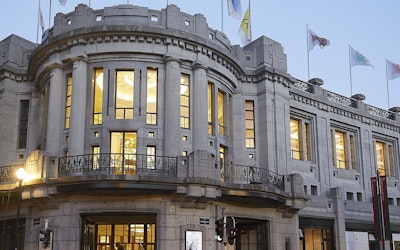 Bozar - Centre for Fine Arts
Boghossian Foundation - Villa Empain
Opening of Villa Empain to the public according to several themes of organised activities and events (exhibitions, concerts, conferences, etc.) from 2010. La Fondation Boghossian has its international office in Villa Empain, on which restoration work began in 2008. With the Stoclet building, constructed by the Austrian architect Josef Hoffmann in 1911, Villa Empain is undoubtedly one of the finest masterpieces of Art Deco architecture in Brussels. In 1930, Baron Louis Empain, then aged 21 years, had this 2,500-metre-square mansion built on the prestigious Avenue des Nations, which was later renamed Avenue Franklin Roosevelt. He entrusted the building of this fine house to the Swiss architect Michel Polak, assisted by his colleague Alfred Hoch. The plan designed for Baron Empain on a 55-acre plot included a monumental villa with four façades in polished granite, a garden surrounding a swimming pool ornamented with a pergola, and a caretaker's lodge. The modern and luxurious nature of this structure soon aroused enthusiasm and curiosity. It is true that the variety and quality of the materials used (marble, polished granite, bronze, wrought iron, stained-glass windows and precious woods), the sophistication of the details and the coherence of the whole thing with simple but imposing lines immediately contributed to its patrimonial value.
Cultural centres
 Boghossian Foundation - Villa Empain
Clockarium Museum
A museum that’s always on time, with a collection of 3,000 antique clocks and other earthenware mantelpiece ornaments. It’s laid out for you in a magnificent art deco house.
 Clockarium Museum
Van Buuren Museum and Gardens
Nestled in the heart of a listed Art Deco architectural and furnishing estate, the van Buuren Museum & Gardens unveils a cultural treasure of rare beauty. Erected in Uccle in 1928 by architects Léon Govaerts and Alexis Van Vaerenbergh, the villa embodies the very essence of Art Deco, preserving its international character influenced by Dutch and French schools.
Inside, an invaluable collection of rare furniture, signed carpets, stained glass windows, sculptures, and masterpieces offers a fascinating dive into art history. This residence, a true architectural gem, has remained intact over the years, thus preserving the integrity of the Art Deco ensemble.
The art collection of the van Buuren Museum & Gardens, reflecting the taste of the owners, offers a captivating overview of art from the 15th to the 20th century. It presents Belgian and international masterpieces, allowing visitors to discover the unique aesthetics of the van Buurens.
The van Buuren Gardens, designed by two of the most prominent Belgian landscape architects, Jules Buyssens and René Pechère, span 1.2 hectares, harmoniously combining picturesque elements and Art Deco. As witnesses of the evolution of the Nouveau Jardin Pittoresque, these gardens offer a unique, immersive experience through six distinct spaces. The recognition of the gardens by the European Route of Historic Gardens attests to their exceptional cultural, historical, and artistic value.
Since its establishment in 1970 by Alice van Buuren, the van Buuren Museum & Gardens Foundation has been committed to preserving and disseminating this cultural treasure. Open to the public since 1975, the museum offers a varied artistic program, enriching the cultural landscape of the region.
 Van Buuren Museum and Gardens
Flagey
Located on the edge of the Flagey square and next to the Ixelles ponds, this building – formerly the headquarters of the national radio and television institution – has now more than ever become a crossroad where artistic disciplines can meet and exchange ideas. Culture lovers of all ages are welcome in this beautiful Art Deco building, to take part in various events which range from concerts of jazz, world, classical and contemporary music, to film events and video projects. Each year, Flagey has the honor of receiving some of the world’s most prominent artists, yet it still insists on offering opportunities to younger (Belgian) talents.
Thanks to the structural support of the different Belgian communities, and because of the exceptional acoustic qualities of the concert studios, the diversity of programming and events such as the Flagey Piano Days and the Brussels Jazz Festival, Flagey is today one of the leading culture houses on the national as well as the international scene.
 Flagey
Kaaitheater
Kaaitheater is a Brussels arts centre, presenting local and international performing arts productions: from the 1980s to the present, from repertoire to experimental, from small theatre to large. In a world of one-off hits, Kaaitheater offers artists long-term commitment. Social and ecological topics are a prominent element in its programme. Kaaitheater presents about 75 productions each season on two locations in the Brussels' canal zone: Kaaitheater and Kaaistudio's.
Kaaitheater (but not the Kaaistudio’s) is undergoing renovation works and its activities are partly hosted by other theatres in Brussels and the surrounding area: De Kriekelaar, KVS, CC de Factorij, CC Strombeek, Westrand, Bronks, Théâtre National Wallonie-Bruxelles, Atelier 210, Halles de Schaerbeek, Rosas Performance Space, Tour & Taxis, AB, Raffinerie Charleroi Danse, Théâtre Varia.
 Kaaitheater
House of European History
Get ready for a journey like no other!
The permanent exhibition begins with the myth of the goddess Europa, exploring Europe’s ancient roots and the continent’s heritage of shared traditions, before Europe’s dramatic journey towards modernity in the 19th century and rebuilding process following World War II.
A multimedia guide in 24 languages gives you new ways to interact with the exhibition, while special activities and Family Discovery Spaces allow children to grasp the story of Europe.
Located next to the European Parliament in a striking Art Deco building in Parc Léopold, the House of European History is an essential part of any tour of the city.
* Free
* Available in 24 languages
* Book online: See practical information
 House of European History
Wiels - Contemporary art centre
It was the brewer Léon Wielemans who asked his friend, the architect Adrien Blomme, to design and build the new buildings of his brewery in Forest. It became the leading monument of industrial archaeology in the art deco style, and houses now Wiels, an international laboratory for the creation and the diffusion of contemporary art. Focusing on visual arts, but granting a particular attention to the crossings and interactions with other disciplines, the centre wishes to present contemporary art in all its diversity and to offer a permanent dialogue with the developments and the most recent debates of the art world. The Art centre has a shop, a café and offer an impressive panorama on the city.
Cultural centres
 Wiels - Contemporary art centre
BRASS - Centre Culturel de Forest
Brass is Vorst's cultural centre, showing a clear predilection for urban arts and the more alternative music scene.
The BRASS focuses on all inhabitants by capitalizing local energies and intercultural, artistic and civic initiatives in the districts of Forest and the south of Brussels. The center is involved in the organization of the Artists' Circuit, the SuperVlieg / SuperMouche Festival and the future music festival in Forest Park. Throughout the year, it offers concerts, shows, exhibitions, workshops, open scenes, citizen meetings, performances, as well as exhibitions and artists residencies in the Abbey of Forest, the district's future cultural center.
 BRASS - Centre Culturel de Forest
Brussels Expo
The Brussels Exhibition Centre asbl is the cornerstone of the Brussels Expo group, founded after the Universal Expo of 1935. Its goal is to promote and develop a meeting venue highlighting economic, commercial, industrial, scientific, cultural or entertainment activities. Brussels Expo is the Belgian market leader in terms of exhibition size. Its responsibilities include property management and related services to the exhibition halls, the ING Arena (concert hall) and the concert hall ‘Madeleine’.
 Brussels Expo
Modern Religious Art Museum - The Basilica of the Sacred Heart in Koekelberg
Koekelberg Basilica is home to the Museum of Modern Religious Art (MMRK).
The MMRK's extensive collection consists mainly of 20th-century paintings, sculptures and drawings with a religious or spiritual theme, realised by artists from Belgium, neighbouring countries, Poland, Armenia and the US. The collection grew out of the leading international collection built up by the West Flemish priest Jan Gekhiere before and after World War II. In 2007, the collection found shelter in the dome of Koekelberg Basilica. Since 2015, a modern scenography offers a renewed view of the collection.
Although the museum is located in the National Basilica of Koekelberg, both are separate institutions. The MMRK is not focused on a religious mission. It focuses on modern and contemporary art with a particular inspiration, drawn from an ancient tradition, of and for people today. The MMRK stands for dialogue and diversity of forms of expression, allowing attention to be paid to "encounter" and "openness of mind". From the observation that religious words, images, symbols and rituals derive their power from their impact and from the fact that a religious story creates space for connection with a "we".
Eye-catchers of the collection include works by Servaes, a Christ statue in bronze by Permeke, two lithographs from Rouault's Miserere, the Crucified by Gustave Van de Woestijne, 7 original lithographs by Manessier depicting the Easter theme, 31 etchings by Joan Miro and a painting by Geneviève Asse and much more.
vzw Friends of the Museum of Modern Religious Art
 Modern Religious Art Museum - The Basilica of the Sacred Heart in Koekelberg
Résidence Palace - International Press Centre Brussels
Immerse yourself in the exceptional art deco atmosphere at the heart of the European district.
Located within the International Press Centre, Restaurant Résidence Palace welcomes you from Monday to Friday, from 8 am to 6 pm.
Our brasserie offers outstanding cuisine in an original and well-preserved art deco setting.
Enjoy the finest seasonal Belgian dishes and exquisite international specialties prepared by our talented chef. Looking for a space to meet your colleagues or simply relax while reading your newspaper? A separate lounge area is also available next to the brasserie.
To book your table at Restaurant Résidence Palace, please contact us at +32 2 235 21 04.
Contemporary venues
 Résidence Palace - International Press Centre Brussels
Albert Hall Brussels
Albert Hall Brussels is a prestigious multi-purpose venue combining Art Deco elegance with modern event facilities.
Ideally located just five minutes from the European district, it offers easy access to major highways and Brussels Airport. Covering 2,500 m², the venue features eight event spaces, including three large halls and five auxiliary rooms, suitable for conferences, corporate meetings, product launches, receptions, gala dinners, concerts, and roadshows.
The largest hall accommodates up to 500 guests in theatre style, with a maximum capacity of 800 people for a single event. Albert Hall is equipped with state-of-the-art audiovisual technology and a high-speed fiber optic connection (1000 Mbps). Parking for up to 300 vehicles is available upon reservation.
A dedicated events team and expert technical support ensure a seamless, premium event experience in the heart of Europe.
Conference & Exhibition Centres
 Albert Hall Brussels
National Basilica of the Sacred Heart - Koekelberg
The Koekelberg Basilica ranks fifth among the world's largest churches, after the Basilica of Notre-Dame de la Paix in Yamoussokro on the Ivory Coast, St Peter's in Rome, St Paul's in London and Santa Maria Dei Fiori in Florence.
Today, the church is in the first place a place of prayer for peace. The church is still used for celebrations of the parish or for big national celebrations. But the basilica is more than that. The basilica has also an important cultural function. It’s a magnificent Art Deco monument, there are two museums, there are yearly different expositions and you can enjoy a wonderful view over Brussels!
We're looking forward to welcoming you soon in this fantastic Art Deco Monument!
Warning : in winter (late October to late March) the basilica closes at 5 pm.
 National Basilica of the Sacred Heart - Koekelberg


