Coudenberg Palace
Once upon a time, the Coudenberg Palace towered over the city of Brussels. Charles V and many other of the most powerful rulers ever to reign in Europe made this princely residence their home between the 12th and 18th centuries, until it was consumed by a terrible fire. Every trace of this prestigious palace simply disappeared underground for many years. Today, however, these ruins constitute a fascinating archeological site incorporating a network of underground passages and chambers.
When you visit it you can explore the principal buildings of the palace and enjoy a stroll along the Rue Isabelle, which is now underground. In the Coudenberg Museum, located in Hoogstraeten House, the finest of the archeological discoveries made during the various excavations of the Coudenberg site are displayed.
 Coudenberg Palace
Église Notre-Dame du Sablon
This church is a precious example of the development of ogival art from Brabant.
It owes its beauty to the city’s crossbowmen, who built it in the 15th century.
Several member of the Thurn und Taxis family are buried there in sarcophagi placed under the chapel of Saint Ursula, which is their burial site. If you pass by this church, do not hesitate to enter and contemplate its architecture and numerous stained glass windows.
 Église Notre-Dame du Sablon
Cathedrale Saints Michel et Gudule
A veritable juxtaposition of Brabant Gothic styles takes us back to the 13th century and the atmosphere of the great builders. Its two towers give it a very French appearance. Building of the cathedral started in 1226, whilst the facade dates from the 15th century. The prodigious stained-glass windows of the transept and of La Chapelle du Saint-Sacrement (Chapel of the Blessed Sacrament) were inspired by the drawings of Bernard Van Orley and donated by Charles V and his family. The chancel is the final resting place of Jean II, Duke of Brabant, his wife Margaret of York and the Archduke Ernest. The Archduke Albert and his wife Isabelle and Archduke Charles de Lorraine lie in the chapel of Saint-Sacrement.
 Cathedrale Saints Michel et Gudule
Royal Museums of Fine Arts of Belgium
The Royal Museums of Fine Arts of Belgium assemble six different museums: the Oldmasters Museum, Meunier Museum, Wiertz Museum and the Magritte Museum.
 Royal Museums of Fine Arts of Belgium
Art & History Museum (RMAH)
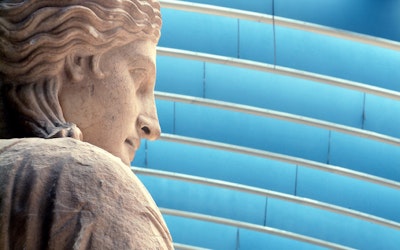
Embark on a fascinating journey through art and history! Come and stroll among the prehistoric flints and Egyptian mummies, walk between the ancient glasses and stand back to contemplate the impressive medieval tapestries. Immerse yourself in the oriental world as you pass Asian Buddhas and travel to the other side of the world to see a gigantic statue from Easter Island. You still have to admire the magnificent collection of Belgian Art Nouveau...
The Art & History Museum is part of the Royal Museums of Art and History (RMAH) that also cover the Musical Instruments Museum (MIM), Halle Gate and the Museums of the Far East (currently closed for renovation).
 Art & History Museum (RMAH)
KBR
At KBR, history comes to life. The Royal Library of Belgium collects all Belgian publications and preserves a vast cultural and historical heritage. The collection contains over 8 million items, including books and manuscripts, newspapers, prints, music scores, coins, medals, and maps. As the national scientific library, KBR’s mission is to manage, study, and make this heritage accessible to the general public.
At the heart of the Royal Library lies the KBR museum. Dive into the enchanting world of manuscripts, polyphonic music, and illuminated miniatures. Discover the magnificent Library of the Dukes of Burgundy and enjoy a unique musical experience.
Enter the miniaturists' workshop and immerse yourself in a soundscape in the late-Gothic Nassau Chapel, where you are surrounded by the polyphony of the Franco-Flemish composers of the 15th and 16th centuries. Want to get hands-on? Design your own miniature, test your skills as a copyist, or experiment with polyphony yourself. Two or four voices, just the tenor or the bassus? The result is in your hands.
 KBR
Église Notre-Dame de la Chapelle
The Church of Notre-Dame de la Chapelle – more commonly known as ‘la Chapelle’ by the people of Brussels – is predominantly built in the Gothic style, although some parts
are in the older Romanesque style. Traditionally, it is listed, alongside the Cathedral of Saints Michael and Gudula and the Church of Notre-Dame du Sablon, as one of the three remaining Gothic churches in Brussels. Extensive restoration work, undertaken in the 19th century under the direction of the city architect, Victor Jamaer,
clearly altered the church’s appearance. The 20th century saw further renovations, which were also aimed at ensuring the building’s safety in light of certain issues (damp, compromised stability, etc.)
The interior of the building is richly adorned with works of art, mostly of the Baroque style (16th and 17th centuries). In 1932, the church was listed as a protected building.
 Église Notre-Dame de la Chapelle
Hôtel Ravenstein
The Hôtel de Clèves-Ravenstein, built in the Brabant Gothic style, is the only example in Brussels dating from this period, i.e. the turn of the 15th and 16th centuries. Consisting of several buildings, it is now occupied by the Cinémathèque
 Hôtel Ravenstein
CINEMATEK
The Royal Belgian Film Archive now called CINEMATEK has one of the largest collection of films in the world, which illustrate the history of film from the beginnings to our times.
The collection increases every year with some 2,000 copies.
Cinematek proposes an excellent programmation with daily silent cinema screenings, anthologies, retrospectives etc.
 CINEMATEK
Palais d'Egmont
Former residence of the Counts of Egmont and later the Dukes of Arenberg, this princely mansion was built in stages from the 16th to the early 20th century. This imposing building is bordered on the south side by a large park of the same name.
 Palais d'Egmont
Grand-Place
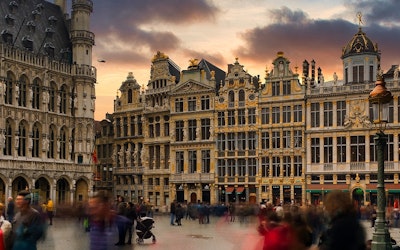
Often considered the most beautiful square in the world, the Grand-Place of Brussels' reputation precedes it!
Today, it still has a political and administrative function as it houses the City of Brussels Town Hall, which remains the workplace of the mayor and most of their aldermen.
As a prestigious venue, it hosts many festive events - concerts, fairs, folklore events, the Christmas tree and nativity scene, sound and light shows, the flower carpet in the summer, etc. - or symbolic events, such as the celebration of sportsmen and women after fine performances.
Its story began as a market square in the 12th century. Gradually, the square was filled with houses and halls, then primarily made of wood. The splendid Gothic town hall was built in the 15th century in three phases; the same 15th century saw the installation of trade guilds in the houses that border the Grand-Place. Even more so than at present, the square was the nerve centre of Brussels life: economically, as already mentioned, with intense sales activity (several halls devoted to the sale of bread - the present King's House or Broodhuis in Dutch -, meat, linen, etc.), culturally (theatrical performances), judicially (with executions taking place on the square) and, of course, local politics.
It was bombarded by Louis XIV's troops in 1695 and was subsequently almost entirely rebuilt. It underwent further major renovations and modifications during the following centuries, especially in the 19th century, which gave it its current appearance.
The Grand-Place of Brussels has been a UNESCO World Heritage Site since 1998.
 Grand-Place
Museum of the City of Brussels / The King’s House
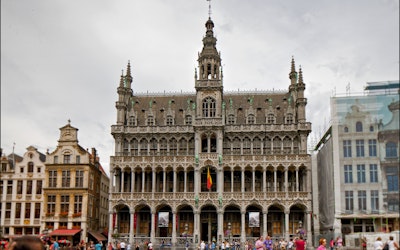
Two majestic buildings that stand opposite each other on Brussels' Grand Place have a long-standing rivalry: on one side you have Brussels' City Hall, and on the other the Broodhuis (Bread House), a UNESCO World Heritage Site which houses the Brussels City Museum. The rivalry between these two buildings is no coincidence. In the 15th century, the Duke of Brabant replaced the 13th century wooden bread market building with a prestigious building that would be a symbol of his power and face off against the imposing building on the other side of the Grand Place that symbolised the city's independence. The building owes its French name of Maison du Roi (King's House) to Charles V, Holy Roman Emperor, who once ruled over a large part of the globe and once owned the Bread House. After being destroyed in the 16th century, it was rebuilt in the Gothic Revival style in the 19th century by city architect Victor Jamaer.
But it's not all about the Broodhuis' history and facade. Inside the Brussels City Museum gives a comprehensive overview of Brussels' history, with particular attention given to the arts, crafts,urbanism and architecture . The original Manneken Pis is also housed here for security reasons, but as for his wardrobe, which is a thousand times larger than even the most passionate fashionista's, you can marvel at that in its dedicated museum on Rue du Chêne - Eikstraat.
Combined ticket giving access to the Brussels City Museum -Maison du Roi and the Garderobe MannekenPis.
 Museum of the City of Brussels / The King’s House
Square du Petit Sablon
Designed in a Flemish neo-renaissance style, the flower garden of square du Petit Sablon is an architectural gem right opposite the Church of Our Lady of the Sablon. In Flemish neo-renaissance style, the flower garden of square du Petit Sablon is an architectural gem right opposite the Church of Our Lady of the Sablon. In this open-air museum, the various Brussels guilds of the day are personified by 48 statues and ten others represent the great humanists of the 16th century: Mercator, Ortélius... The flora reveals yet more symbolism: nine clumps of carved boxwood representing the nine Belgian provinces of the era and a crown for the kingdom as a whole.
At the bottom of the garden stands a fountain-statue in honour of the Counts of Egmont and Hornes, resistance fighters who were beheaded in the 16th century during the tyrannical Spanish regime. Last but not least, two flights of stairs lead you to Rue aux Laines and on to Egmont Park.
 Square du Petit Sablon
Erasmus House & Beguinage Museums
The Erasmus House, beguinage, and collegiate church of Saints Peter and Guido form a magnificent historical ensemble, right in the heart of the commune. Erasmus House – in which the famous philosopher and scholar stayed from May to October 1521 – is one of the oldest Gothic houses in the Belgian capital. It hosts a sublime collection of paintings, prints and sculptures by 15th-17th century masters like Albrecht Dürer, Hugo Van der Goes, Cornelis Metsys… not to mention portraits of Erasmus inspired by Hans Holbein and Quentin Metsys. A rich collection of 16th century books is a nod to the singular humanist’s thinking.
A medicinal plant garden – designed by landscape architect René Pechère – presents around one hundred medicinal plants that were known to 16th century physicians. Beyond it stretches a philosophical garden that is home to the works of contemporary artists like Marie-Jo Lafontaine and Bob Verschueren.
The beguinage of Anderlecht is Belgium’s smallest. Founded in 1252, today it consists of two wings framing an enclosed garden with its own well. It housed beguines right up until the French Revolution. The beguinage has been restored in depth and is once again open to visitors each 1st Sunday of the month with guided tours. Discover this entirely restored architectural jewel in a pristine state.
A new museum project is currently in the pipeline.
 Erasmus House & Beguinage Museums


