Sewer Museum
Why not visit the Brussels sewers and the Sewers museum during your next excursion in Brussels. A visit of Brussels' sewerage network - led by experienced guides or ex-workers - is extraordinary, full of surprises, but above all fascinating. The sewers have become vital to our way of life, so much so that it's hard to imagine what it was like before they existed. A visit of the Sewers Museum (and a real sewer!) is therefore an amazing, unusual and thrilling experience.
Brussels' first sewerage network came into use in the 17th century, but they were very limited and a large part of the city's waste still found its way into the river Senne. The river carried waste and carrion and regularly overflowed, or dried out in the summer, leaving behind less-than-pleasant smells.
It was partially due to this, that the government in the second half of the 19th century decided to completely transform the Senne and its neighbouring streets by building great boulevards to cover the insalubrious area. Between the two world wars a second transformation: a portion of the Senne was diverted and then covered over. The sewerage network improved and grew over the years, going from 45 km in 1847 to the 350 km that we have today.
The entrance to the museum is housed in one of the toll pavilions that used to collect taxes on goods that entered the city.
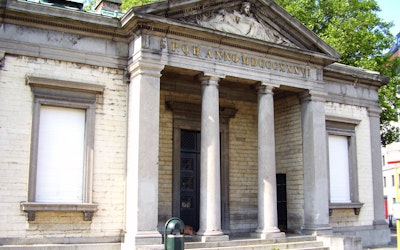 Sewer Museum
Museum of the City of Brussels / The King’s House
Two majestic buildings that stand opposite each other on Brussels' Grand Place have a long-standing rivalry: on one side you have Brussels' City Hall, and on the other the Broodhuis (Bread House), a UNESCO World Heritage Site which houses the Brussels City Museum. The rivalry between these two buildings is no coincidence. In the 15th century, the Duke of Brabant replaced the 13th century wooden bread market building with a prestigious building that would be a symbol of his power and face off against the imposing building on the other side of the Grand Place that symbolised the city's independence. The building owes its French name of Maison du Roi (King's House) to Charles V, Holy Roman Emperor, who once ruled over a large part of the globe and once owned the Bread House. After being destroyed in the 16th century, it was rebuilt in the Gothic Revival style in the 19th century by city architect Victor Jamaer.
But it's not all about the Broodhuis' history and facade. Inside the Brussels City Museum gives a comprehensive overview of Brussels' history, with particular attention given to the arts, crafts,urbanism and architecture . The original Manneken Pis is also housed here for security reasons, but as for his wardrobe, which is a thousand times larger than even the most passionate fashionista's, you can marvel at that in its dedicated museum on Rue du Chêne - Eikstraat.
Combined ticket giving access to the Brussels City Museum -Maison du Roi and the Garderobe MannekenPis.
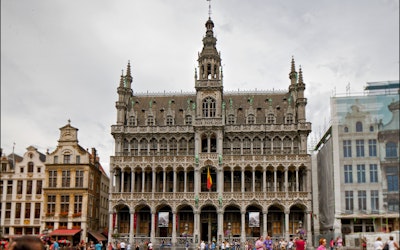 Museum of the City of Brussels / The King’s House
GardeRobe MannekenPis
The incredible Manneken-Pis dressing room awaits you at 19 Rue du Chêne, a stone's throw away from the famous fountain.
A representative selection of more than one hundred costumes is presented according to seven themes: geography, folklore, charity and citizens’ associations, trades, celebrities and characters, sports and designers. They show the richness of this fabulous and uncommon collection, which today includes nearly 1,000 items! The sculpture’s clothing – which is a tradition dating back to the 17th century! – is still part of the folklore and historical heritage of the city of Brussels.
Combined ticket giving access to the Brussels City Museum -Maison du Roi and the Garderobe MannekenPis.
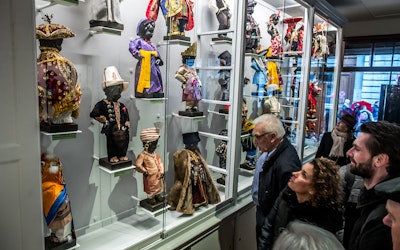 GardeRobe MannekenPis
Fashion & Lace Museum
The Fashion & Lace Museum displays its collections by means of major annual exhibitions. These address both the design and the production and social use of the garments.
The exhibitions transport you to diverse and captivating worlds. From items never before exhibited, such as in Masculinities or Back Side, through historical themes, such as the glamour of the 1930s or the bold ‘70s, to exhibitions devoted to Belgian designers such as Carine Gilson and Jean-Paul Lespagnard.
Parallel to these major exhibitions, the museum also offers:
- The Fashion Room, an unparalleled space in Belgium, provides you with the opportunity to understand how a museum builds its collections. Discover exceptional items, not hidden behind glass, in order to see them up close.
- The Lace Room displays remarkable pieces that illustrate the finesse, high quality and beauty of Brussels lace. Explore the history of this type of fabric, so valued by the elites in the 17th century yet no longer in vogue today.
Housed in a series of historic houses at the heart of Brussels, the Fashion & Lace Museum holds some 15,000 pieces from the 16th century to the present. The Museum has the most important collections in the world when it comes to Brussels design and production, which it seeks to position in a Belgian and international context.
Its collections attest to the changes in fashion as well as to a specific era of our culture and our society.
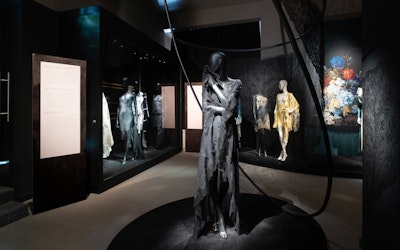 Fashion & Lace Museum
Art & marges museum
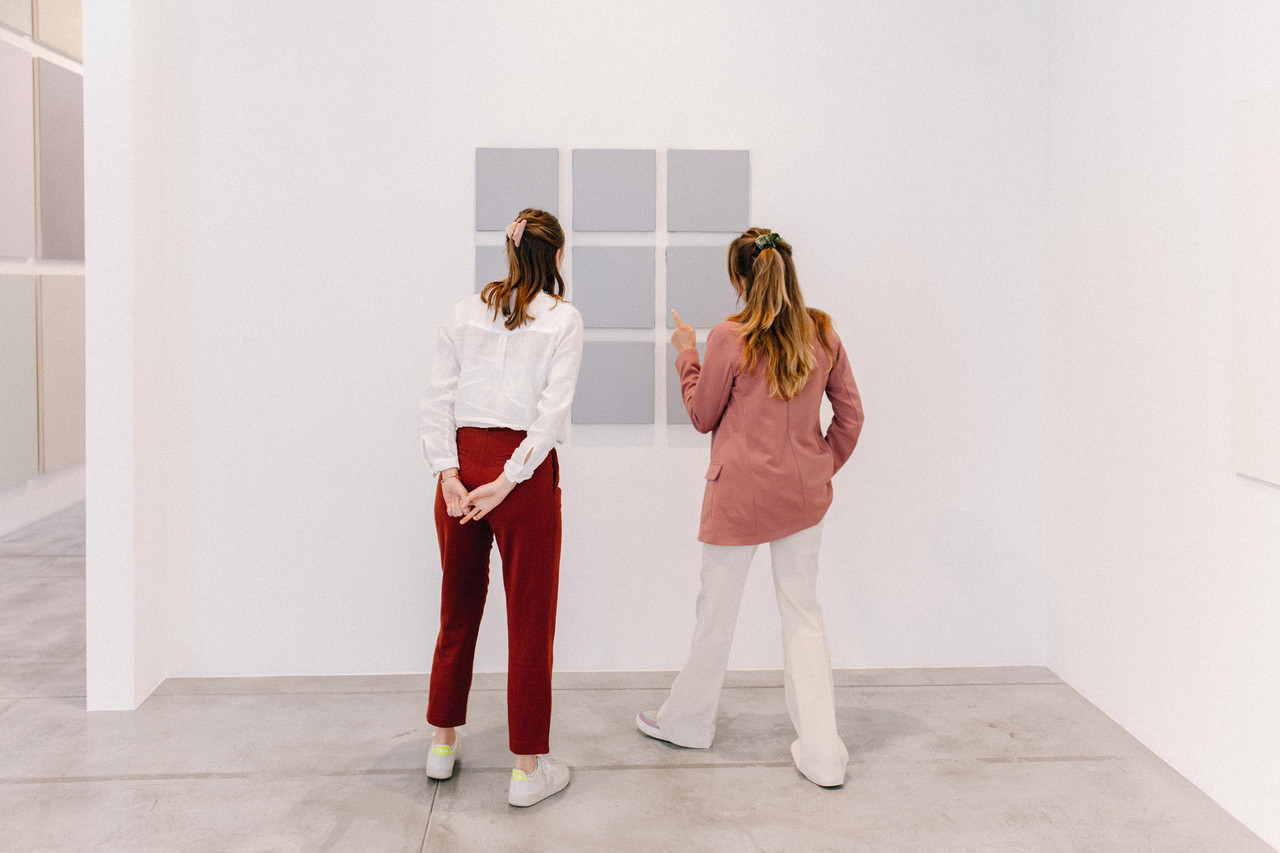
Located in the heart of Brussels, the Art et marges museum is dedicated to ‘art brut’ or ‘outsider art’.
Its collection was built up from the mid-1980s with artworks from self-taught artists and artistic workshops for the mentally disabled and the psychologically fragile. It now comprises over 4,500 international works produced outside the established contemporary art circuit.
Its temporary exhibitions bring together artists from both sides of the fringe, questioning the boundaries of art and its very definition.
 Art & marges museum
Halles Saint-Géry
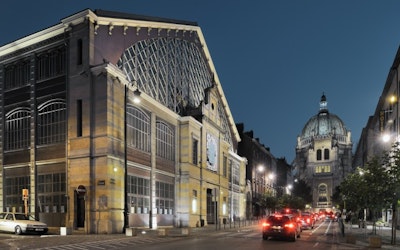
Halles Saint-Géry is a cultural centre located in the heart of Brussels, in a remarkable heritage-listed building.
Since June 2026 Marché Saint-Géry brings new life to the historic Halles Saint-Géry, a landmark of Brussels heritage, built in 1881. Fifty years after the closure of the original market, this iconic venue is being returned to its original purpose of providing visitors with a welcoming, lively and inviting marketplace that preserves its cultural role in the heart of Brussels.
With exhibitions, meetings, performances, concerts and other major events, it reaffirms its role as an ambassador for heritage, determined to preserve, transmit and reinvent Brussels' legacy.
A unique space combining exhibition, dining and relaxation facilities, Les Halles Saint-Géry is a celebration of Brussels savoir-vivre, where history can be savoured as much as contemplated, in a spirit of conviviality and celebration.
This project is under the aegis of the Brussels-Capital Region.
 Halles Saint-Géry
Jewish Museum of Belgium
Located in the Sablon district of Brussels, the Jewish Museum of Belgium takes a fresh look at Jewish history and culture through exhibitions and activities focusing on sharing, discovery and accessibility for all sectors of the public.
The museum is currently closed for renovation work.
 Jewish Museum of Belgium
Belgian Museum of Freemasonry
Historic and thematic overview of the history of freemasonry in Belgium.
The Belgian Museum of Freemasonry is a gesture of openness, an invitation by an institution renowned for it’s discretion and veiled in mystery, to get acquainted with its history. The museum, situated in an exquisitely restored neoclassical townhouse (house Dewez, late 18th century), presents artworks, ritual objects, jewellery, textiles, documents and books from the 18th century and on. They illustrate the origins, historic evolution, workings, ideas and present structures of freemasonry.
Exceptional opening:
First Sunday of the month: 13.00 - 17.00 free admission
 Belgian Museum of Freemasonry
House of Maurice Béjart
Almost for 30 years Maurice Béjart, one of Belgium's most celebrated choreographers, lived in this house, where there's a great deal to discover about him thanks to a lot of documents.
Maurice Béjart lived in Brussels for nearly 30 years. The permanent exhibition entitled 'Béjart Parcours Libre' gives visitors the opportunity to discover this significant place where the choreographer lived, as well as a selection of archive pieces documenting his ballets (programmes, posters, manuscripts, original drawings, photographs, videos etc.).
"When Maurice Huisman, the new director of Théatre de la Monnaie, called me in 1959 to put on Le Sacre du Printemps, I didn’t think that this was going to be the beginning of a long life in Brussels. Almost 30 years! It is in Brussels that most of my choreographic creations were achieved.” Maurice Béjart
 House of Maurice Béjart
Erasmus House & Beguinage Museums
The Erasmus House, beguinage, and collegiate church of Saints Peter and Guido form a magnificent historical ensemble, right in the heart of the commune. Erasmus House – in which the famous philosopher and scholar stayed from May to October 1521 – is one of the oldest Gothic houses in the Belgian capital. It hosts a sublime collection of paintings, prints and sculptures by 15th-17th century masters like Albrecht Dürer, Hugo Van der Goes, Cornelis Metsys… not to mention portraits of Erasmus inspired by Hans Holbein and Quentin Metsys. A rich collection of 16th century books is a nod to the singular humanist’s thinking.
A medicinal plant garden – designed by landscape architect René Pechère – presents around one hundred medicinal plants that were known to 16th century physicians. Beyond it stretches a philosophical garden that is home to the works of contemporary artists like Marie-Jo Lafontaine and Bob Verschueren.
The beguinage of Anderlecht is Belgium’s smallest. Founded in 1252, today it consists of two wings framing an enclosed garden with its own well. It housed beguines right up until the French Revolution. The beguinage has been restored in depth and is once again open to visitors each 1st Sunday of the month with guided tours. Discover this entirely restored architectural jewel in a pristine state.
A new museum project is currently in the pipeline.
 Erasmus House & Beguinage Museums
Red Cloister Art Centre
 Red Cloister Art Centre
la Fonderie - Brussels museum of Industry and Labour
The Foundry has been offering guided tours of the city by boat and on foot for almost 30 years. Regularly updated, and completed each year with new themes or devices, these tours are a success and attract several thousand visitors each year. From children to groups of seniors, the target audience for their tours is wide. Most of the tours are available both on a fixed schedule for individuals and families, and for groups on request.
Museums & tourist attractions
 la Fonderie - Brussels museum of Industry and Labour
La Médiatine
La Médiatine
Musée des Plantes Médicinales et de la Pharmacie (ULB)
The museum, established within the Faculty of Pharmacy, offers 80 displays of medicinal plant samples and products from natural origin coming from the whole world, commented and presented by theme. As such, it tells the history of medicinal plants and their effect (active components and properties) and uses, both in past and recent medicine.
 Musée des Plantes Médicinales et de la Pharmacie (ULB)
Home Frit' Home
 Home Frit' Home
Musée Communal Pieter Cnops
 Musée Communal Pieter Cnops
Museum of Medecine (ULB)
The Museum of Medicine is intended for all enthusiasts, experts or simply anyone interested in medicine and medical thinking featured in art, history and literature, from antiquity to the present day.
Its proximity to Erasmus Hospital allows the museum to reconstruct its items in fascinating X-rays, revealing the secrets of their composition, such as the museum’s latest masterpiece, Dr Auzoux’s "Ecorché"
 Museum of Medecine (ULB)
Musée National de la Résistance
 Musée National de la Résistance
Municipal Museum of Molenbeek Saint-Jean
The MoMuse exhibits the historical heritage of Molenbeek, from its origins to the present day, with a special emphasis on the 19th and 20th centuries. This small territory of some 6km², has evolved over many centuries. From humble rural beginnings, it experienced an intense industrialisation in the 1840s, followed by a deindustrialisation not without consequences, and finally, at the dawn of the 1960s, an intense urban growth. All these events have profoundly changed the way of life, and essence of the commune.
 Municipal Museum of Molenbeek Saint-Jean
Wittockiana: Museum of book arts and bookbinding
The Wittockiana, which bears the name of its founder and was designed by the architect Emmanuel de Callataÿ, opened its doors in autumn 1983. Avid bibliophile since his adolescence, Michel Wittock built up over his lifetime an impressive collection of books, manuscripts and autographs. Since deciding to share his collection with his bibliophile friends and thus opening the library to the public, the Wittockiana quickly gained a reputation that far exceeded its founder’s hopes and expectations. The circumstances at the time were just right to accelerate the Wittockiana, thanks to the sucess of its publications and expositions with a much larger public than expected as well as thanks to early international recognition, to its status as an indispensable institution in the bibliophilic world. An expansion quickly became necessary to best accomodate this reputation. In 1995 construction of the first floor was entrusted to Wittock’s youngest son Charly Wittock, who had since become an architect.
 Wittockiana: Museum of book arts and bookbinding
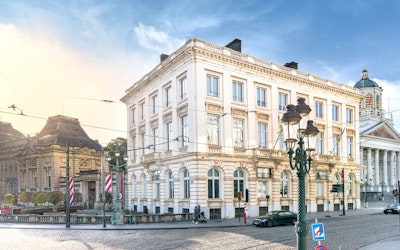
BELvue museum
Chips, beer and chocolates... surely there is more to Belgium than that? Democracy, prosperity, solidarity, pluralism, migration, languages and Europe: these are the themes used by the BELvue Museum to help you to discover Belgium. Each one is developed through present-day testimonials and then traced right through history. This is a modern, original way of gaining a fuller understanding of modern-day Belgium.
Have a look at the gallery too: there are more than 200 objects to view, each one forming a tangible memory of Belgium. Here are just a few examples: a lithograph by Magritte, a motorcycle, crystal vases by Val Saint-Lambert, and a football signed by the Red Devils. The very essence of Belgian-ness!
Speciale openingstijden op schoolvakanties en feestdagen 9.30 tot 17.00 uur
24/12 en 31/12 9u30 tot 16u00
Het BELvue Museum is elke woensdag vanaf 14u en de eerste zondag van de maand gratis toegankelijk.
 BELvue museum